Machame Route
The Machame Route — affectionately known as the “Whiskey Route” — is widely regarded as the most scenic and rewarding path to the summit of Mount Kilimanjaro, Africa’s highest peak and the world’s tallest freestanding volcano. Standing at 5,895 metres (19,341 feet) above sea level, Uhuru Peak on Kilimanjaro is a bucket-list destination for adventurers from every corner of the globe, and the Machame Route is the trail that puts you there in the most spectacular fashion.
Traversing a dazzling array of ecological zones — from dense equatorial rainforest, through open moorland and surreal alpine desert, to the glaciated summit crater — the Machame Route offers trekkers an unrivalled visual journey. The route ascends through the southern face of the mountain, offering breathtaking views of the Southern Icefields, the Breach Wall, and sweeping vistas of the Shira Plateau.
Whether you are a seasoned high-altitude mountaineer or an enthusiastic first-time trekker, this guide covers everything you need to know: total distance and elevation profile, difficulty assessment, packing essentials, day-by-day itineraries for both 6-day and 7-day variations, and the compelling reasons why Machame consistently ranks as the most popular route on Kilimanjaro.
How Many Kilometres is the Machame Route?
The total distance of the Machame Route from start gate to finish gate is approximately 53–62 kilometres (33–38 miles), depending on the number of days taken and whether acclimatisation detours are included. Here is how the distance breaks down:
- Machame Gate to Machame Camp: 11 km (ascent day 1)
- Machame Camp to Shira Camp: 5 km (ascent day 2)
- Shira Camp to Lava Tower to Barranco Camp: 9 km (acclimatization day)
- Barranco Camp to Karanga Camp: 4 km
- Karanga Camp to Barafu Base Camp: 4 km
- Barafu Base Camp to Uhuru Peak: 5 km (summit push)
- Uhuru Peak to Mweka Camp (descent): 12 km
- Mweka Camp to Mweka Gate (exit): 10 km
The cumulative ascent is over 4,000 vertical metres, making the Machame Route a genuine high-altitude challenge regardless of its non-technical nature. The descent follows the Mweka Route — a direct path through rainforest back to the park gate — which differs from the ascent path, adding to the overall distance and variety.
On a 7-day itinerary, an additional overnight at Karanga Camp extends total walking but improves acclimatization. The longer format is recommended for most trekkers as it significantly raises summit success rates.
Machame Route Elevation Profile
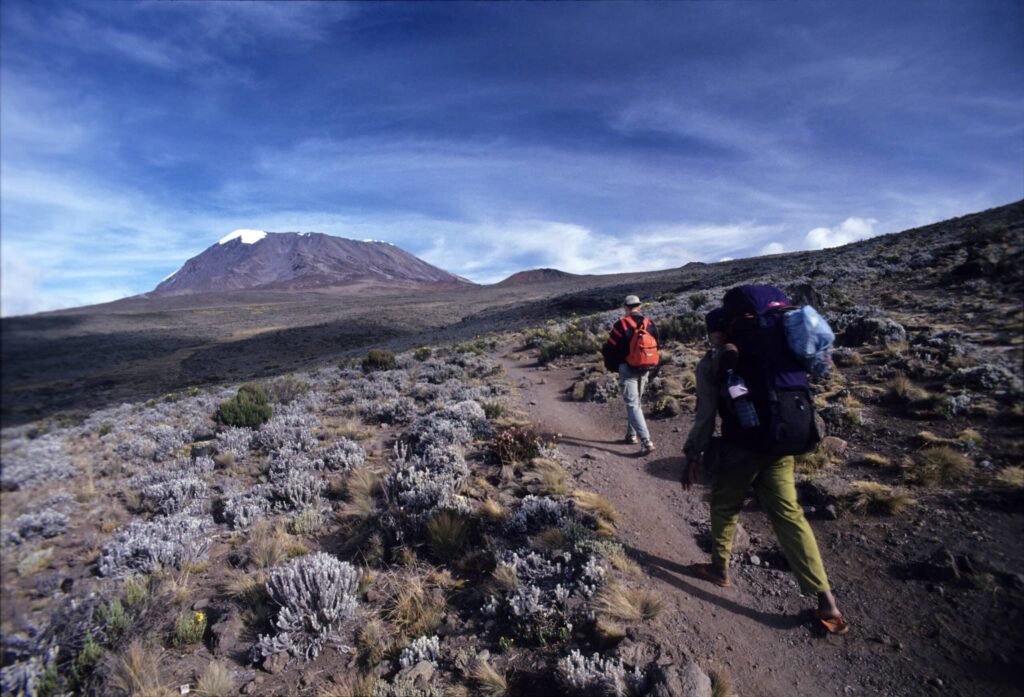
One of the defining features of the Machame Route is its “climb high, sleep low” elevation profile — a proven technique for acclimatization. The route reaches a high point of 4,600 m at Lava Tower before descending to Barranco Camp at 3,960 m, allowing the body to adapt while still sleeping at a lower altitude. The following table shows the full elevation profile:
Camp | Elevation | Distance from Previous | Cumulative Distance |
Machame Gate (Start) | 1,800 m / 5,905 ft | – | – |
Machame Camp | 3,020 m / 9,908 ft | 11 km / 6.8 mi | 11 km |
Shira Camp | 3,840 m / 12,598 ft | 5 km / 3.1 mi | 16 km |
Lava Tower | 4,600 m / 15,091 ft | 6 km / 3.7 mi | 22 km |
Barranco Camp | 3,960 m / 12,992 ft | 3 km / 1.9 mi | 25 km |
Karanga Camp | 4,035 m / 13,238 ft | 4 km / 2.5 mi | 29 km |
Barafu Base Camp | 4,673 m / 15,331 ft | 4 km / 2.5 mi | 33 km |
Uhuru Peak (Summit) | 5,895 m / 19,341 ft | 5 km / 3.1 mi | 38 km |
Mweka Camp (Descent) | 3,100 m / 10,171 ft | 12 km / 7.5 mi | 50 km |
Mweka Gate (End) | 1,640 m / 5,380 ft | 10 km / 6.2 mi | 60 km |
The summit push departs Barafu Base Camp at midnight (around 23:00–00:00) in order to reach Uhuru Peak at sunrise, typically around 7:00–8:00 AM. Temperatures at the summit can drop to -20°C (-4°F) or lower with windchill, making proper gear absolutely essential.
What to Pack to Climb Kilimanjaro via Machame Route
Packing the right gear is one of the most critical factors in a successful Kilimanjaro summit attempt. The Machame Route passes through five distinct climate zones — each with dramatically different temperature and weather conditions. You will need to be prepared for tropical heat at the gate and arctic cold at the summit, sometimes within the same 24-hour period.
Category | Items |
Clothing & Layers | Moisture-wicking base layers (top & bottom), Fleece mid-layer, Waterproof/windproof outer shell jacket & pants, Down jacket (for summit night), Hiking pants (convertible), Waterproof gaiters, Wide-brimmed sun hat, Warm beanie and balaclava, Lightweight gloves + heavy summit mittens, Wool or synthetic hiking socks (6–8 pairs), Camp sandals or Crocs |
Footwear | Waterproof hiking boots (well broken-in), Lightweight trail runners (optional for lower camps) |
Sleeping Gear | Sleeping bag rated to at least -15°C / 5°F (summit night temperatures), Sleeping bag liner for extra warmth, Sleeping pad (provided by most operators) |
Trekking Equipment | Trekking poles (highly recommended), Headlamp + extra batteries (summit push is at night), Hydration system or water bottles (3L capacity), Water purification tablets or filter |
Health & Safety | Personal first-aid kit, Diamox (acetazolamide) – consult your doctor, Sunscreen SPF 50+, Lip balm with SPF, Blister plasters (Compeed), Hand sanitizer, Altitude sickness medication |
Documents & Money | Passport (original), Travel insurance documents, Tanzanian entry visa, Emergency contacts list, USD cash for tips (budget $200–$300 for crew tips) |
Electronics | Camera or smartphone, Portable power bank / solar charger, Universal travel adapter |
Backpack Setup | Summit daypack (20–30L), Large duffel bag (for porters to carry), Rain cover for all bags |
Weight is a key consideration. Porters will carry your main duffel bag (maximum 15 kg/33 lbs including their own gear), so keep it light. On summit day, you carry your own daypack — typically 5–8 kg — containing water, snacks, extra layers, a headlamp, and camera.
How Difficult is the Machame Route?
The Machame Route is rated as moderately difficult to difficult among Kilimanjaro routes. It is a non-technical trek — meaning no ropes, harnesses, or technical climbing skills are required — but the combination of extreme altitude, steep terrain on certain sections, and multi-day physical exertion makes it a serious undertaking that should not be underestimated.
Physical Difficulty
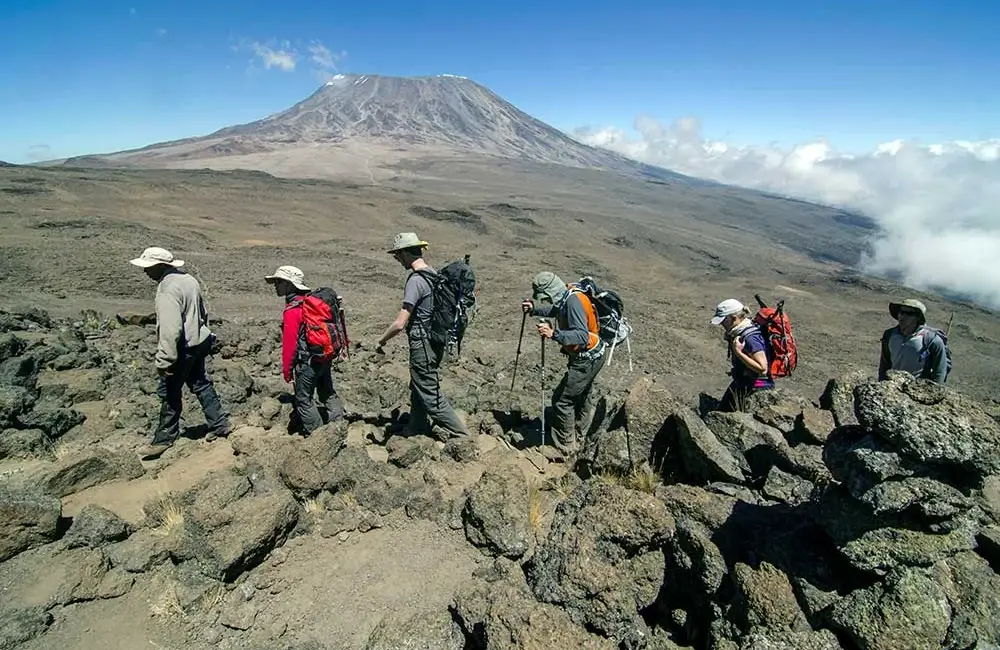
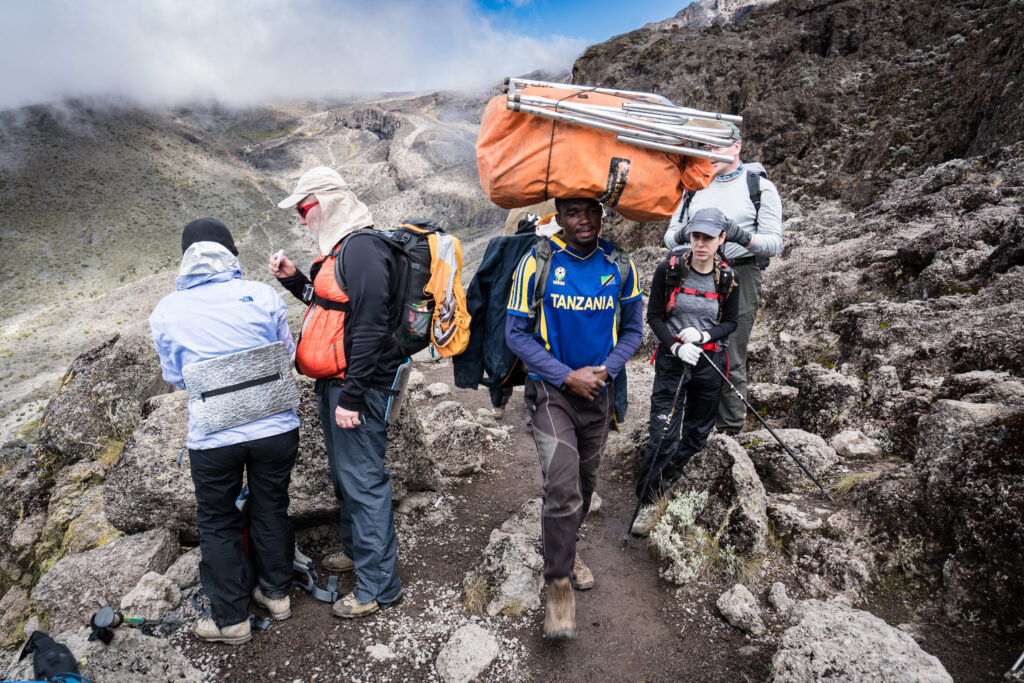
The route involves between 5 and 8 hours of walking per day, with some days (particularly the summit night) extending to 12–16 hours. The terrain ranges from muddy forest paths to rocky volcanic scree and ice near the crater rim. The Barranco Wall — encountered on Day 4 of the 7-day itinerary — is a 300-metre near-vertical scramble that requires the use of hands and feet but is not classified as technical climbing.
Altitude Challenge
The single greatest difficulty on the Machame Route is altitude. At elevations above 4,000 m, the atmospheric oxygen level is approximately 60% of sea-level pressure. Symptoms of Acute Mountain Sickness (AMS) — including headache, nausea, dizziness, fatigue, and sleep disturbance — are extremely common and affect the majority of trekkers to varying degrees. Serious altitude-related illnesses such as High Altitude Pulmonary Edema (HAPE) or High Altitude Cerebral Edema (HACE) are life-threatening and require immediate descent.
The 7-day Machame itinerary is strongly preferred over the 6-day version precisely because the extra day at Karanga Camp provides additional acclimatization time, significantly reducing the risk of altitude illness and improving summit success rates.
Difficulty Rating Summary
- Overall Rating: Moderate to Difficult (non-technical)
- Physical Fitness Required: Good cardiovascular fitness; no mountaineering experience needed
- Previous Hiking Experience: Recommended — multi-day backpacking helpful
- Technical Skills: None required
- Summit Success Rate (6 days): Approximately 65–75%
- Summit Success Rate (7 days): Approximately 80–90%
- Best For: Adventurous trekkers seeking a scenic, challenging route with high success rates
What is the Most Successful Route on Kilimanjaro?
Among all Kilimanjaro routes, the Lemosho Route and the Northern Circuit Route consistently yield the highest summit success rates — typically 90–95% for 8-day itineraries — because of their superior acclimatization profiles and longer durations on the mountain. However, the Machame Route is widely considered the best balance of high success rate, scenic beauty, cost-effectiveness, and accessibility.
Comparison of Major Kilimanjaro Routes
Route | Duration | Success Rate | Difficulty | Highlight |
Machame (Whiskey) | 6–7 days | 75–90% | Moderate-Hard | Scenic, varied terrain |
Lemosho | 7–8 days | 90–95% | Moderate | Best acclimatization |
Northern Circuit | 8–9 days | 95%+ | Moderate | Longest, most remote |
Rongai | 6–7 days | 70–80% | Moderate | Dry side approach |
Marangu (Coca-Cola) | 5–6 days | 50–65% | Easy-Moderate | Only huts on route |
Umbwe | 5–6 days | 55–65% | Hard | Steepest, most direct |
The Machame Route strikes an exceptional balance — it is more scenic than the Marangu Route, more affordable than the Lemosho and Northern Circuit routes, and offers a superior acclimatization profile to the Umbwe Route. It is the most popular route on Kilimanjaro for these reasons, accounting for approximately 35–40% of all annual summit attempts.
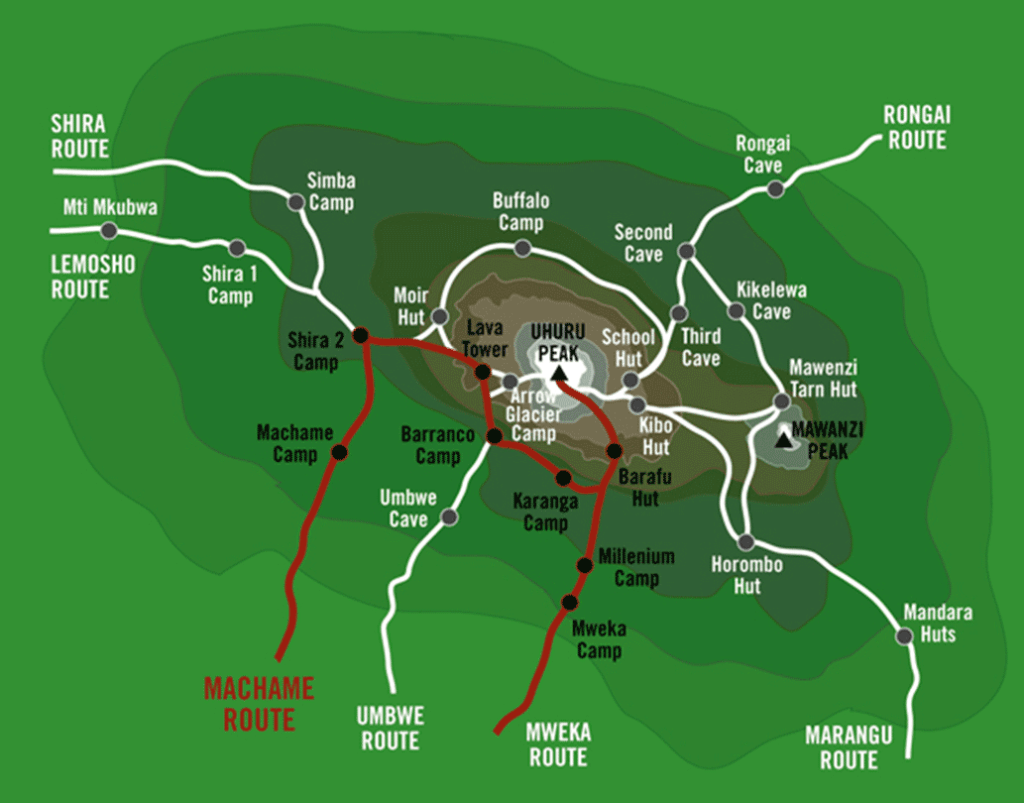
Machame Route Map — Geographic Overview
The Machame Route begins at Machame Gate on the southwestern slopes of Kilimanjaro at an elevation of 1,800 m, located approximately 28 km from Moshi town and accessible by road. The route winds north and east through the following key geographic waypoints:
- Machame Gate (1,800 m) — Entry point in the montane rainforest zone. Rich biodiversity including colobus monkeys, Kilimanjaro white-eyed slater, and giant heather.
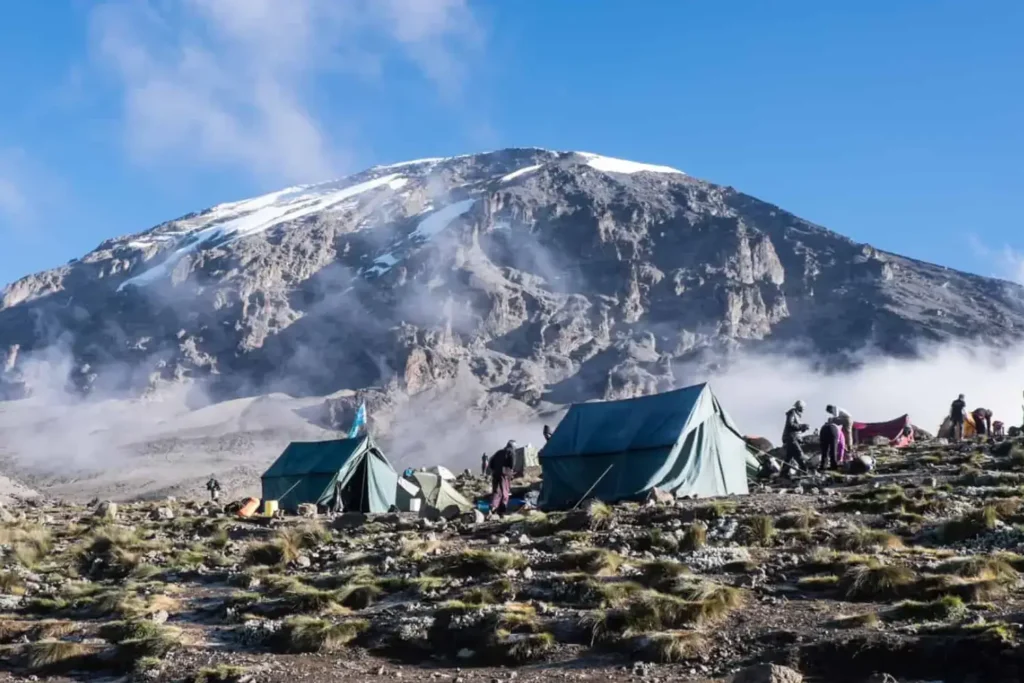
- Machame Camp (3,020 m) — First overnight camp. Above the tree line, transitioning into moorland.
- Shira Plateau & Shira Camp (3,840 m) — The ancient collapsed caldera of Shira, one of Kilimanjaro’s original three volcanic cones. Wide open views.
- Lava Tower (4,600 m) — A dramatic volcanic plug used as an acclimatization point. Lunch stop on most itineraries. Best to go up high and sleep low.
- Barranco Camp (3,960 m) — Below the Great Barranco Wall. Spectacular views of the Southern Icefields and Breach Wall.
- Barranco Wall — A thrilling 300 m scramble that is one of the most memorable sections of the entire route.
- Karanga Valley & Karanga Camp (4,035 m) — Used as an extra acclimatization camp on 7-day itineraries.
- Barafu Base Camp (4,673 m) — The launch point for all summit attempts. Wind-exposed and barren.
- Stella Point (5,739 m) — First crater rim point reached on the ascent. Most strenuous section of the summit push.
- Uhuru Peak (5,895 m) — The roof of Africa. The iconic summit sign. Panoramic views across Tanzania, Kenya, and the Indian Ocean on clear days.
- Mweka Camp (3,100 m) — Descent camp via the Mweka Route. Through upper moorland.
- Mweka Gate (1,640 m) — Exit point. Certificates awarded here by KINAPA (Kilimanjaro National Park Authority).
The route follows a horseshoe arc around the southern face of the mountain, maximizing exposure to the spectacular alpine desert and glacier views while incorporating critical acclimatization altitude gains and losses. Physical maps and GPS tracks for the Machame Route are available from KINAPA offices in Moshi and from all licensed guiding operators.
Machame Route Kilimanjaro — 6-Day Itinerary
The 6-day Machame Route itinerary is the shorter option, favored by physically fit trekkers with limited time. While it is entirely achievable, the reduced acclimatization time — particularly the lack of a dedicated rest day between Barranco and Barafu — means summit success rates are lower than on the 7-day version. The 6-day option is best suited to climbers who have recent experience at altitude or who are using Diamox under medical guidance.
Day | Route | Distance | Elevation | Notes |
Day 1 | Machame Gate → Machame Camp | 11 km | 1,800 → 3,020 m | Forest trail, 5–7 hrs |
Day 2 | Machame → Shira Camp | 5 km | 3,020 → 3,840 m | Heath/moorland, 4–6 hrs |
Day 3 | Shira → Lava Tower → Barranco | 9 km | 3,840 → 4,600 → 3,960 m | Acclimatize at Lava Tower |
Day 4 | Barranco → Karanga → Barafu | 8 km | 3,960 → 4,673 m | Barranco Wall climb |
Day 5 | Barafu → Uhuru Peak → Mweka | 17 km | 4,673 → 5,895 → 3,100 m | Summit night, 12–16 hrs |
Day 6 | Mweka Camp → Mweka Gate | 10 km | 3,100 → 1,640 m | Rainforest descent, 3–4 hrs |
Day-by-Day Notes — 6 Days
Day 1: Machame Gate to Machame Camp
The trek begins at Machame Gate (1,800 m), where all permits are checked and porters are assembled. The first day ascends through dense Afro-montane rainforest — one of the most biologically rich ecosystems on earth — for approximately 5–7 hours. Expect occasional rain and mud. Camp is set in an open area just above the forest line, with your first views of Kibo’s southern face.
Day 2: Machame Camp to Shira Camp
A shorter but steeper ascent leads through heather and moorland zones into the open Shira Plateau. The landscape becomes increasingly surreal and lunar. The camp sits at the edge of the plateau with 360-degree views. First signs of altitude may appear — drink plenty of water and walk slowly.
Day 3: Shira Camp to Lava Tower to Barranco Camp
This is the most important acclimatization day on the route. The trail ascends to Lava Tower (4,600 m) for lunch — the highest point reached so far — before descending to Barranco Camp (3,960 m) for the night. This climb-high-sleep-low approach is essential for altitude adaptation. The afternoon views of the Breach Wall and Southern Icefields from Barranco are among the finest on the mountain.
Day 4: Barranco Camp to Karanga Camp to Barafu Base Camp
On the 6-day itinerary, this is a long and demanding day combining two sections. The morning begins with the famous Barranco Wall scramble — steep, exhilarating, and requiring the use of hands and feet. After reaching Karanga Camp, trekkers continue upward to Barafu Base Camp (4,673 m) — a bleak, wind-swept plateau that serves as the final camp. Afternoon rest and preparation for the summit night.
Day 5: Barafu to Uhuru Peak to Mweka Camp
Summit day is the culmination of the entire expedition. Departure from Barafu is typically between 23:00 and 00:00, with headlamps blazing against the dark volcanic scree. The ascent to Stella Point (5,739 m) on the crater rim takes 5–7 hours of relentless uphill effort. From Stella Point, a further 45–60 minutes leads along the crater rim to Uhuru Peak (5,895 m). After photos and celebration, descent is made all the way to Mweka Camp.
Day 6: Mweka Camp to Mweka Gate
The final day is a descent through lush rainforest on the Mweka Route. It takes 3–4 hours to reach Mweka Gate, where certificates of achievement are presented: a Summit Certificate for those who reached Uhuru Peak, and a Completion Certificate for those who reached Stella Point or Gilman’s Point.
Machame Route Kilimanjaro — 7-Day Itinerary
The 7-day Machame Route itinerary is the most widely recommended option by experienced Kilimanjaro guides, park rangers, and mountain medicine specialists. The additional day is spent at Karanga Camp (4,035 m), allowing the body an extra 24 hours to produce additional red blood cells and adapt to the reduced oxygen environment. This extra acclimatization day increases summit success rates by approximately 10–15% compared to the 6-day version and significantly reduces the risk of altitude sickness.
Day | Route | Distance | Elevation | Notes |
Day 1 | Machame Gate → Machame Camp | 11 km | 1,800 → 3,020 m | Forest trail, 5–7 hrs |
Day 2 | Machame → Shira Camp | 5 km | 3,020 → 3,840 m | Heath/moorland, 4–6 hrs |
Day 3 | Shira → Lava Tower → Barranco | 9 km | 3,840 → 4,600 → 3,960 m | Critical acclimatization day |
Day 4 | Barranco → Karanga Camp | 4 km | 3,960 → 4,035 m | Barranco Wall, rest day |
Day 5 | Karanga → Barafu Base Camp | 4 km | 4,035 → 4,673 m | Rest & prepare for summit |
Day 6 | Barafu → Uhuru Peak → Mweka | 17 km | 4,673 → 5,895 → 3,100 m | Summit push, 12–16 hrs |
Day 7 | Mweka Camp → Mweka Gate | 10 km | 3,100 → 1,640 m | Descent through rainforest |
Day-by-Day Notes — 7 Days
Day 1–3: Machame Gate → Machame Camp → Shira → Barranco
Identical to the 6-day itinerary for the first three days. The route ascends through rainforest and moorland to the Shira Plateau, then climbs to Lava Tower for the critical acclimatization high point before descending to Barranco Camp. By Day 3, most trekkers have settled into the rhythm of the mountain and altitude awareness has become routine.
Day 4: Barranco Camp to Karanga Camp
After the dramatic Barranco Wall scramble — a highlight of any Kilimanjaro trek — the path winds through the scenic Karanga Valley to Karanga Camp (4,035 m). This is a shorter walking day of just 4 km, deliberately paced to allow maximum rest and recovery. Karanga is a beautiful, sheltered camp with reliable water sources nearby. The afternoon is spent resting, hydrating, and mentally preparing for the final push.
Day 5: Karanga Camp to Barafu Base Camp
Another moderate ascent of 4 km brings trekkers to Barafu Base Camp (4,673 m). This is sometimes called the “last supper” camp — the final meal before the summit push. Guides conduct equipment checks, issue last-minute briefings, and trekkers are strongly encouraged to sleep from approximately 18:00–22:00 before the midnight wake-up call for summit day.
Day 6: Barafu to Uhuru Peak to Mweka Camp
The summit push begins in darkness, cold, and silence. The trail zigzags steeply upward through loose scree and, higher up, firm volcanic rock. The altitude at this point reduces many trekkers to a slow, deliberate one-step-at-a-time pace — known locally as “pole pole” (slowly, slowly in Swahili). Reaching Stella Point on the crater rim triggers an emotional release in most climbers. The final walk along the crater rim to Uhuru Peak, with the glaciers glittering and the African dawn breaking, is one of the most extraordinary experiences on Earth.
Day 7: Mweka Camp to Mweka Gate
The final descent through the rainforest is often celebrated with singing from the porter team, certificate presentations at the gate, and emotional farewells. Many trekkers choose to overnight in Moshi or Arusha to celebrate before continuing their Tanzania adventure — perhaps on safari to the Serengeti, Ngorongoro Crater, or Zanzibar beaches.
Why Climb Kilimanjaro Through the Machame Route?
Among the seven established routes on Kilimanjaro, the Machame Route stands out for a compelling combination of scenic beauty, acclimatization quality, route diversity, and overall trekking experience. Here are the most important reasons climbers around the world choose Machame:
1. Unmatched Scenic Beauty
The Machame Route traverses more diverse and visually spectacular terrain than any other path on Kilimanjaro. From the primordial rainforest of the lower slopes, through the surreal heathland of the Shira Plateau, past the dramatic Lava Tower and Barranco Wall, across the moonscape alpine desert, and up to the ice-draped summit crater — every day brings a completely new visual environment. The views of the Southern Icefields and Breach Wall from Barranco Camp are considered by many experienced trekkers to be the single most beautiful campsite view in all of Africa.
2. Superior Acclimatization Profile
The Machame Route’s signature “climb high, sleep low” acclimatization profile — most dramatically expressed on Day 3, when trekkers ascend to Lava Tower (4,600 m) before sleeping at Barranco (3,960 m) — is one of the most effective altitude-adaptation strategies in mountain trekking. This approach stimulates the production of red blood cells and EPO (erythropoietin) without exposing trekkers to a dangerous overnight stay at extreme altitude before they are ready. The 7-day version adds a further night at Karanga to reinforce this adaptation.
3. High Summit Success Rate
The Machame Route’s strong acclimatization profile translates directly into higher summit success rates compared to routes of similar duration. On a 7-day Machame itinerary with an experienced guide and operator, success rates of 80–90% are routinely achieved. This significantly outperforms the Marangu Route (50–65%) despite similar duration, and approaches the rates achieved on the longer (and more expensive) Lemosho and Northern Circuit routes.
4. Route Diversity — Ascent and Descent on Different Paths
Unlike the Marangu Route (where ascent and descent follow the same path), the Machame Route ascends via the southwestern face and descends via the Mweka Route on the southeast. This not only provides a completely new visual experience on the way down, but it also reduces trail congestion and provides a more satisfying sense of completing a full circuit of the mountain’s southern face.
5. The Barranco Wall Experience
The Barranco Wall is one of the most celebrated sections of any Kilimanjaro route — a 300-metre near-vertical scramble that requires hand-and-foot climbing but no technical equipment. This section transforms an already exceptional trek into an adventure that tests confidence, physical agility, and mental resilience. For trekkers seeking an experience beyond simple walking, the Barranco Wall is a highlight not found on most other routes.
6. Vibrant Trail Community
The Machame Route’s popularity means that trekkers share the trail with climbers from dozens of countries — an international community bound together by the shared challenge of altitude and the camaraderie that emerges naturally from living on a mountain. Camp evenings are filled with stories, laughter, and the sounds of porter singing. Many trekkers cite the people they met on the Machame Route as one of their most treasured memories of the climb.
7. Outstanding Porter and Guide Experience
The Machame Route’s prestige attracts some of the most experienced and enthusiastic guides and porter teams in Tanzania. Licensed operators running Machame expeditions typically employ KINAPA-certified guides, high-altitude mountain rescue-trained crew, and experienced cooks who serve hot, nutritious meals at every camp. The Machame porter teams are known for their professionalism, singing traditions, and genuine warmth toward trekkers.
8. Excellent Value for Quality
Compared to the 8-day Lemosho Route or the 9-day Northern Circuit — which achieve similar or slightly higher summit success rates — the 7-day Machame Route represents outstanding value. KINAPA park fees, guide costs, and operator fees are generally 15–25% lower than premium long-route packages while still delivering an exceptional experience. For climbers balancing budget and ambition, Machame hits the sweet spot.
Essential Practical Information
Best Time to Climb the Machame Route
The two optimal climbing seasons for Kilimanjaro are the dry seasons: January–March and June–October. The best months overall are January–February (post-long rains, excellent visibility) and July–September (cool and dry, peak season). April–May and November are the long and short rainy seasons respectively — summit attempts are still possible but rainfall increases significantly and visibility is reduced.
Park Fees and Permits
All Kilimanjaro climbs must be booked through a KINAPA-licensed guiding operator — independent climbing is not permitted. Park fees are paid by the operator and included in trek packages. As of current rates, gate fees, camping fees, rescue fees, and guide costs total approximately $700–$1,000 USD per person for a 7-day Machame trek, before operator profit margins. Total trek packages from licensed operators typically range from $1,800–$3,500 USD per person depending on group size, operator reputation, and services included.
Physical Training Recommendations
No technical mountaineering skills are required for the Machame Route, but physical preparation is strongly recommended. An ideal training program for the 3–6 months before your climb would include: regular cardiovascular exercise (hiking, cycling, running), specific stair or hill training to prepare the legs for sustained uphill effort, and ideally one or two multi-day hiking trips to practice carrying a daypack and sleeping in a tent. If possible, a weekend at altitude (above 2,500 m) in the months before the climb provides valuable physiological preparation.
Altitude Sickness Prevention
Diamox (acetazolamide) is the most widely used pharmaceutical aid for altitude sickness prevention on Kilimanjaro. It works by stimulating the respiratory system to breathe more deeply and efficiently, accelerating acclimatization. The typical dose is 125–250 mg twice daily, starting 1–2 days before reaching altitude and continuing for 2 days above base camp. Diamox is a prescription medication — consult your physician or a travel medicine specialist at least 6 weeks before your climb to discuss suitability and potential side effects (common: tingling in fingers and toes, increased urination, mild diuresis).
Conclusion: Is the Machame Route Right for You?
The Machame Route is the ideal choice for the vast majority of Kilimanjaro climbers who want an extraordinary mountain experience, a genuine physical and mental challenge, breathtaking scenery, and a high chance of standing on the Roof of Africa. It is neither the easiest nor the most direct route, but it is arguably the most rewarding.
If you are physically fit, have a minimum of 6–7 days available, and are willing to invest in proper preparation — both physical training and quality gear — the Machame Route will deliver an experience that transcends the ordinary. The moment you step through Machame Gate and begin your journey into the rainforest, you become part of a story that has been written by hundreds of thousands of climbers before you, each of them drawn by the same simple, powerful aspiration: