Northern Circuit Route
The Northern Circuit route is widely regarded as the most scenic, most remote, and highest-success-rate path to the summit of Mount Kilimanjaro — Africa’s highest peak at 5,895 metres (19,341 feet) above sea level. Opened to trekkers in the early 2000s, this extraordinary route circles nearly the entire northern face of the mountain before ascending to the crater rim at Stella Point and on to Uhuru Peak.
Unlike the more popular and crowded southern routes such as Machame or Marangu, the Northern Circuit takes climbers through isolated wilderness, pristine moorland, dramatic alpine deserts, and awe-inspiring glacial landscapes that very few trekkers ever witness. The route is sometimes called the 360-degree route or the full-circuit route because it genuinely circumnavigates the mountain’s northern slopes, offering unmatched panoramic views from virtually every angle.
Whether you are a seasoned mountaineer or a determined first-timer, this comprehensive guide answers every question you might have about the Northern Circuit — from distance and elevation profiles to costs, success rates, accommodation, and how it stacks up against Kilimanjaro’s other routes.
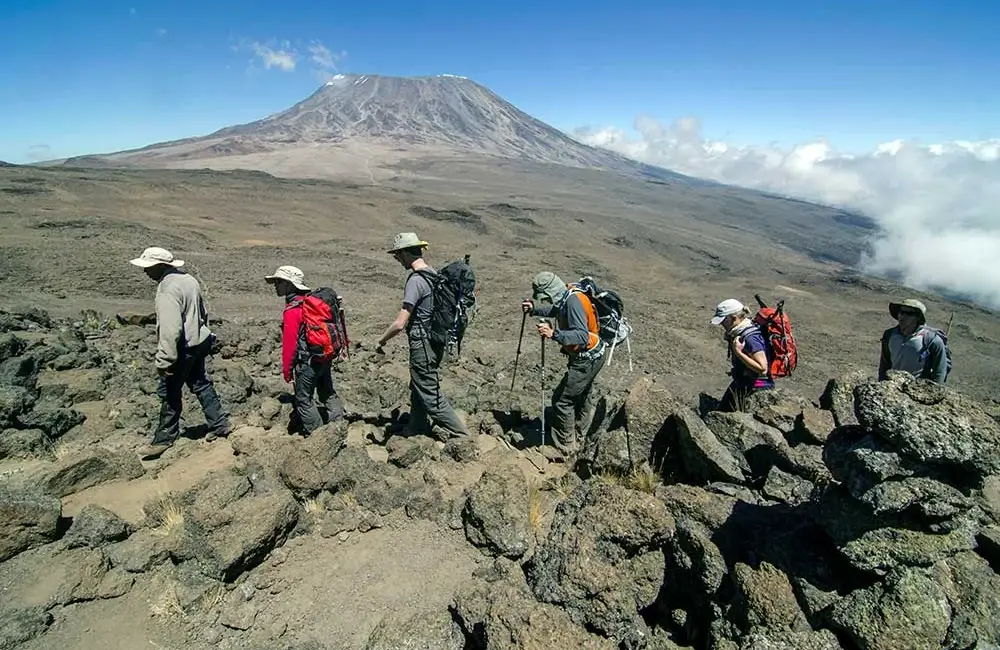
Northern Circuit Route — At a Glance
Total Distance | Approximately 96 km (60 miles) — the longest route on Kilimanjaro |
Summit Elevation | 5,895 m (19,341 ft) — Uhuru Peak, the highest point in Africa |
Recommended Duration | 9 days (8 nights) — also possible in 8 days |
Minimum Duration | 8 days (not recommended for acclimatisation) |
Difficulty | Moderate to Challenging (high altitude adds difficulty) |
Success Rate | ~90–95% on 9-day itinerary — highest of all routes |
Trailhead | Londorossi Gate (western approach via Lemosho) |
Summit Gate | Mweka Gate (descent) |
Accommodation | Tented camps only — no huts on the route |
Best Season | January–March and June–October |
Park Fees (2025) | Approximately $850–$1,000 USD in TANAPA fees |
Full Cost Range | $3,500–$6,000+ USD (all-inclusive operator packages) |
How Many Kilometres is the Northern Circuit Route?
The Northern Circuit route covers approximately 96 kilometres (roughly 60 miles) from the Londorossi Gate trailhead to the Mweka Gate descent point, making it the longest trekking route on Mount Kilimanjaro by a considerable margin.
By comparison, the Machame Route covers about 49 km and the Lemosho Route about 56 km. The Northern Circuit’s additional distance is largely attributable to its sweeping traverse of the mountain’s entire northern sector — a region that no other commercial route enters.
The extra kilometres are not a disadvantage. On the contrary, the longer distance spread over more days produces a gentler, more gradual altitude profile that gives the body far more time to acclimatise. This is the single most important reason why the Northern Circuit boasts the highest summit success rate on the mountain.
What Park Do You Climb Kilimanjaro In?
Kilimanjaro is located entirely within Kilimanjaro National Park (KINAPA), a UNESCO World Heritage Site managed by the Tanzania National Parks Authority (TANAPA). The park covers an area of 1,688 square kilometres and encompasses all climbing routes on the mountain, including the Northern Circuit.
All climbers are legally required to pay national park entry, camping, rescue, and conservation fees before ascending. These fees are non-negotiable and must be paid through a licensed Kilimanjaro operator or directly at the gate. As of 2025, total TANAPA fees for a Northern Circuit climb amount to approximately $850–$1,000 USD per person, depending on the number of days spent on the mountain.
The park gates relevant to the Northern Circuit are:
- Londorossi Gate — the entry point on the western side of the mountain, where most Northern Circuit climbers begin their trek after branching off from the Lemosho starting zone.
- Mweka Gate — the standard exit gate used by Northern Circuit and Machame route descenders, located on the southern slopes of the mountain.
- Kilimanjaro National Park Headquarters — located in Marangu, where permits and logistics can be confirmed.
How Difficult is the Northern Circuit Route?
The Northern Circuit is rated as a moderate to challenging trek. However, it is important to understand that no route on Kilimanjaro is truly “easy” — every path to the summit involves significant altitude gain, physical exertion, and the ever-present challenge of altitude sickness.
Physical Difficulty
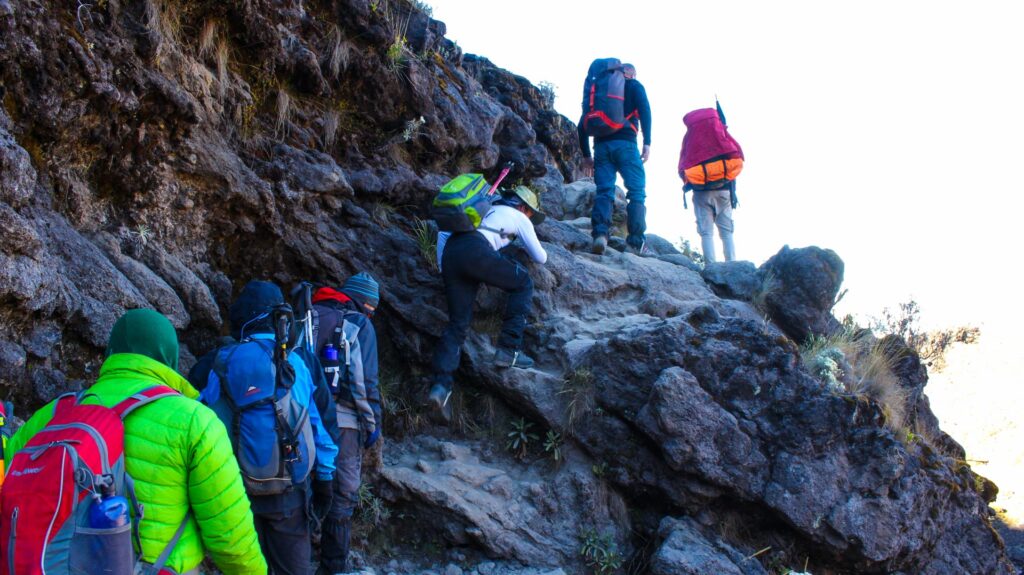
In terms of pure terrain and steepness, the Northern Circuit is not exceptionally technical. There is no rock climbing, scrambling, or glaciated ice-axe work required on the standard path. The trails are well-defined, and the gradients — while demanding in places — are manageable for most fit adults with proper preparation.
The summit night ascent from Barranco Camp or Kosovo Camp to Uhuru Peak is the most gruelling section, covering steep volcanic scree and loose rock for several hours, typically in sub-zero temperatures, in the dark, and at altitudes exceeding 5,000 metres.
Altitude Challenge
The greatest difficulty on Kilimanjaro — and the primary reason people fail to summit — is not fitness but altitude. Acute Mountain Sickness (AMS) can affect anyone regardless of age, fitness, or previous trekking experience. Symptoms include headache, nausea, fatigue, loss of appetite, and in severe cases, potentially life-threatening conditions such as High Altitude Pulmonary Oedema (HAPE) or High Altitude Cerebral Oedema (HACE).
The Northern Circuit’s 9-day profile is specifically designed to counter AMS. By spending more nights at intermediate elevations before climbing high, the body produces more red blood cells and adapts more effectively to the thin air. This is why the Northern Circuit offers the best chances of summiting successfully.
Fitness Requirements
Trekkers should be in good cardiovascular health and capable of walking 6–10 hours per day for multiple consecutive days carrying a daypack (3–5 kg). Prior high-altitude trekking experience is an advantage but not a requirement. A 3–6 month training programme including hiking, cardio exercise, and leg strengthening is strongly recommended.
What is the Most Successful Route on Kilimanjaro?
The Northern Circuit route consistently records the highest summit success rate of any route on Kilimanjaro — estimated at 90–95% for climbers on the recommended 9-day itinerary. This makes it not only the most scenic route on the mountain, but statistically the most reliable path to Uhuru Peak.
The success rates of major Kilimanjaro routes compare as follows:
Route | Success Rate | Typical Duration |
Northern Circuit | 90–95% | 9 days (recommended) |
Lemosho | 85–90% | 7–8 days |
Machame | 80–85% | 6–7 days |
Rongai | 75–80% | 6–7 days |
Marangu | 65–70% | 5–6 days |
Umbwe | 60–70% | 5–6 days |
The Northern Circuit’s superior success rate stems from its exceptional acclimatisation profile, combined with the “climb high, sleep low” principle. Trekkers frequently camp below 4,000 metres while making day excursions above 4,500 metres, giving the body ample time to adjust before the final summit push.
Northern Circuit Route Elevation Profile
Understanding the elevation profile of the Northern Circuit is essential for both mental and physical preparation. The route begins at a relatively low elevation and systematically climbs through five distinct ecological zones before reaching the summit.
Location / Camp | Elevation | Ecological Zone |
Londorossi Gate | 2,100 m (6,890 ft) | Montane Forest |
Mti Mkubwa Camp | 2,750 m (9,022 ft) | Montane Forest |
Shira 1 Camp | 3,500 m (11,483 ft) | Heather / Moorland |
Shira 2 Camp | 3,840 m (12,598 ft) | Heather / Moorland |
Moir Hut Camp | 4,200 m (13,780 ft) | Alpine Desert |
Third Cave Camp | 3,870 m (12,697 ft) | Alpine Desert |
School Hut / Kosovo Camp | 4,750 m (15,584 ft) | Alpine Desert |
Stella Point | 5,739 m (18,828 ft) | Arctic Zone |
Uhuru Peak (Summit) | 5,895 m (19,341 ft) | Arctic Zone |
Millennium Camp (descent) | 3,820 m (12,533 ft) | Heather / Moorland |
Mweka Gate (exit) | 1,640 m (5,380 ft) | Montane Forest |
The five ecological zones climbers pass through are: Cultivated Zone (below the park boundary), Montane Forest (1,800–2,800 m), Heather and Moorland (2,800–4,000 m), Alpine Desert (4,000–5,000 m), and the Arctic Summit Zone (above 5,000 m). Each zone has dramatically different vegetation, wildlife, temperatures, and terrain.
Northern Circuit Route Map & Path Description
The Northern Circuit begins at Londorossi Gate on the western side of the mountain, sharing its opening two days with the Lemosho Route. After crossing the Shira Plateau — an ancient collapsed caldera — the route diverges dramatically northward instead of heading south like the Lemosho.
Route Path Overview
Day 1–2: Entry through Londorossi Gate and the rainforest — the trail climbs through dense montane forest before emerging onto the moorland and reaching the wide expanse of the Shira Plateau.
Day 3: The route heads eastward toward Lava Tower (4,642 m) — a dramatic volcanic plug that provides an excellent acclimatization hike — before descending to Moir Hut Camp. This “climb high, sleep low” tactic is a cornerstone of the Northern Circuit’s superior acclimatization strategy.
Day 4–5: The critical northern traverse — the route moves north and east around the base of the Kibo cone through remote, rarely-visited wilderness. Trekkers pass through stunning boulder-strewn landscapes with views of the northern ice fields, Mawenzi Peak, and the vast plains of northern Tanzania. This section passes Third Cave Camp and Buffalo Camp.
Day 6–7: The eastern approach — the trail joins the Rongai Route corridor and reaches School Hut (Kosovo Camp), the highest camp on the mountain at 4,750 m. This is an excellent acclimatisation camp.
Day 8 (Summit Night): Climbers depart Kosovo Camp around midnight, ascending via the Kibo Crater rim. Most Northern Circuit climbers ascend to Stella Point (5,739 m) via the southeast crater wall, then traverse the rim to Uhuru Peak (5,895 m).
Day 9: Descent via the Mweka Trail to Mweka Gate — a rapid descent of more than 4,000 vertical metres through all ecological zones.
Northern Circuit Route Itineraries
Northern Circuit Kilimanjaro — 6-Day Itinerary
A 6-day Northern Circuit itinerary is not standard and is not offered by reputable operators. The Northern Circuit’s primary selling point is its long acclimatisation schedule — compressing the route into 6 days would largely negate this advantage and would be comparable to rushing the Lemosho or Machame route. However, some operators offer a 6-day variation that covers only part of the northern traverse, effectively a shortened circuit with reduced acclimatisation time.
Note: The minimum recommended duration for any Kilimanjaro summit attempt is 7 days, and for the Northern Circuit specifically, 9 days is strongly recommended. Operators offering a 6-day Northern Circuit should be viewed with caution, as safety and acclimatisation may be compromised.
Northern Circuit Kilimanjaro — 8-Day Itinerary
The 8-day Northern Circuit itinerary is the minimum duration most reputable operators will offer for this route. It provides reasonable acclimatisation, though it is not as leisurely or as safe as the 9-day option. Here is a typical 8-day schedule:
Day | Camp / Route | Elevation | Dist. | Hours |
1 | Londorossi Gate → Mti Mkubwa Camp | 2,100→2,750m | ~7 km | 3–4 hrs |
2 | Mti Mkubwa → Shira 1 Camp | 2,750→3,500m | ~8 km | 4–5 hrs |
3 | Shira 1 → Shira 2 Camp (via Shira Cathedral) | 3,500→3,840m | ~9 km | 5–6 hrs |
4 | Shira 2 → Lava Tower → Moir Hut | 3,840→4,642→4,200m | ~13 km | 6–7 hrs |
5 | Moir Hut → Third Cave → Buffalo Camp | 4,200→3,870→3,960m | ~14 km | 6–8 hrs |
6 | Buffalo Camp → Kosovo Camp (School Hut) | 3,960→4,750m | ~14 km | 6–7 hrs |
7 | Kosovo Camp → Summit → High Camp/Millennium | 4,750→5,895→3,820m | ~18 km | 12–14 hrs |
8 | Millennium Camp → Mweka Gate | 3,820→1,640m | ~10 km | 4–5 hrs |
Northern Circuit Kilimanjaro — 9-Day Itinerary (Recommended)
The 9-day itinerary is the gold standard for the Northern Circuit and the option most strongly recommended by experienced guides, mountaineering doctors, and veteran Kilimanjaro operators. The extra day allows for a dedicated acclimatisation excursion on the Shira Plateau and a more comfortable camp progression.
Day | Camp / Route | Elevation | Dist. | Hours |
1 | Londorossi Gate → Mti Mkubwa Camp | 2,100→2,750m | ~7 km | 3–4 hrs |
2 | Mti Mkubwa → Shira 1 Camp | 2,750→3,500m | ~8 km | 4–5 hrs |
3 | Shira 1 → Shira 2 Camp | 3,500→3,840m | ~7 km | 4–5 hrs |
4 | Acclimatisation Day: Shira 2 → Lava Tower → Shira 2 | 3,840→4,642→3,840m | ~8 km | 4–5 hrs |
5 | Shira 2 → Moir Hut Camp (via Lava Tower) | 3,840→4,200m | ~10 km | 5–6 hrs |
6 | Moir Hut → Third Cave / Buffalo Camp | 4,200→3,960m | ~14 km | 6–8 hrs |
7 | Buffalo Camp → Kosovo Camp (School Hut) | 3,960→4,750m | ~14 km | 6–7 hrs |
8 | Summit Night: Kosovo → Uhuru Peak → Millennium Camp | 4,750→5,895→3,820m | ~18 km | 12–15 hrs |
9 | Millennium Camp → Mweka Gate → Moshi | 3,820→1,640m | ~10 km | 4–5 hrs |
Why Climb Kilimanjaro via the Northern Circuit?
There are many compelling reasons to choose the Northern Circuit over the mountain’s other routes. Here are the most important:
1. Highest Summit Success Rate
As detailed above, the Northern Circuit’s extended 9-day acclimatisation schedule delivers a summit success rate of 90–95%, making it the most reliable route on the mountain. For anyone determined to reach Uhuru Peak, the Northern Circuit offers the best statistical odds.
2. Extraordinary Wilderness and Isolation
The northern face of Kilimanjaro is rarely visited. Unlike the southern routes — which can feel crowded during peak season — the Northern Circuit passes through pristine wilderness where you may encounter wildlife including elephants, buffalo, eland, and various birds that inhabit the lower slopes. The sense of remoteness and adventure is unmatched on any other Kilimanjaro route.
3. Unrivalled Scenic Diversity
The Northern Circuit is the only route that offers a genuine 360-degree circumnavigation of the Kibo cone. Trekkers are treated to breathtaking views of the Shira Plateau, the Lava Tower, the Baranco Wall (seen from below), Mawenzi Peak, the Saddle, and the vast northern ice fields. The changing landscapes — from dense equatorial forest to barren lunar desert — create an unforgettable visual journey.
4. The Best Camping Experience
The Northern Circuit is a fully tented camping route. All equipment — tents, sleeping mats, mess tents, kitchen equipment, portable toilets — is carried by the guide team. This creates a far more immersive, authentic wilderness experience compared to the Marangu Route’s crowded huts.
5. Ideal for Experienced Trekkers
For those who have already climbed Kilimanjaro on a standard route and want a more challenging, rewarding, and different experience, the Northern Circuit is the definitive next step. Its remoteness and length make it a genuine expedition-style undertaking.
Northern Circuit Route Kilimanjaro — Huts & Camps
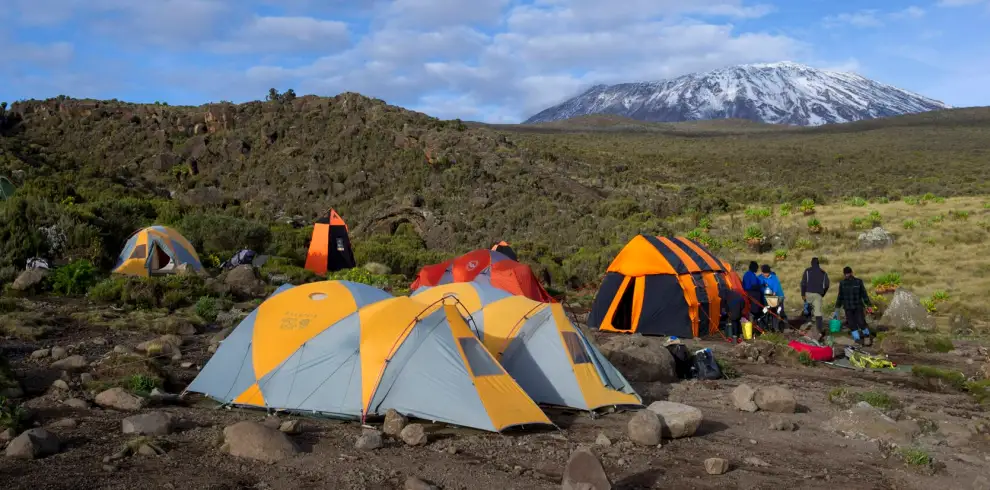
Unlike the Marangu Route (the only Kilimanjaro route with permanent sleeping huts), the Northern Circuit is a fully tented camping route. There are no huts, lodges, or permanent sleeping structures on the trail itself. All accommodation is in tents provided by your operator and carried by the porter team.
What the Camp Setup Includes
- Sleeping tents (double or single occupancy, depending on your booking)
- Communal mess tent with fold-out tables and chairs for meals
- Portable, private toilet tent (“long drop” style)
- Cook’s tent and kitchen facilities
- Guide and porter sleeping tents
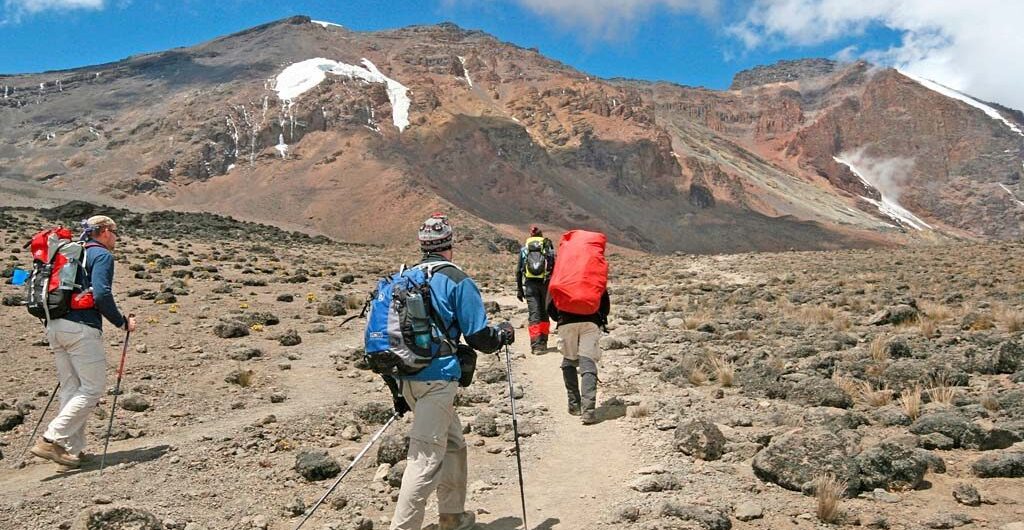
Main Camps on the Northern Circuit
Camp Name | Elevation | Notes |
Mti Mkubwa Camp | 2,750 m | Forest camp; first night on the mountain |
Shira 1 Camp | 3,500 m | Open moorland; dramatic views of Shira Plateau |
Shira 2 Camp | 3,840 m | Key acclimatisation base; Lava Tower excursion starts here |
Moir Hut Camp | 4,200 m | Remote northern area; one of the least-visited camps on the mountain |
Third Cave Camp | 3,870 m | Dramatic boulderscapes; elephant sightings occasionally reported |
Buffalo Camp | 3,960 m | Northern traverse camp; excellent views of Mawenzi |
Kosovo / School Hut Camp | 4,750 m | Highest camp; summit night departs from here |
Millennium Camp | 3,820 m | Post-summit descent camp; final night on the mountain |
Northern Circuit Route Success Rate
The Northern Circuit boasts an overall summit success rate of approximately 90–95% on the 9-day itinerary, making it the most successful route on Kilimanjaro. On the 8-day version, success rates are somewhat lower — estimated at 85–90% — due to the slightly compressed acclimatisation schedule.
These statistics represent climbers who reach Uhuru Peak (the true summit at 5,895 m). Climbers who reach Stella Point (5,739 m) on the crater rim are sometimes counted separately in operator statistics, so it is worth asking your operator to specify whether their success rate refers to Uhuru Peak or any summit point.
Factors that most strongly predict individual summit success on the Northern Circuit include:
- Choosing the 9-day itinerary over shorter options
- Proper pre-trek physical conditioning
- Staying well-hydrated throughout the climb (3–4 litres per day)
- Ascending slowly and practising the Swahili mantra “pole pole” (slowly slowly)
- Using Diamox (acetazolamide) for acclimatisation, if medically appropriate
- Choosing a reputable operator with qualified, experienced guides
- Not pushing through severe AMS symptoms — knowing when to descend
What is the Hardest Route on Kilimanjaro?
The Umbwe Route is widely considered the hardest route on Kilimanjaro. It is the most direct, steepest, and most demanding path on the mountain, and it has the lowest summit success rate of all routes — estimated at 60–70%. The Umbwe Route ascends the southern slopes via a narrow, densely forested ridge that quickly gives way to extremely steep alpine terrain, leaving virtually no time for acclimatisation.
Here is a comparison of Kilimanjaro route difficulty:
- Umbwe Route — Hardest: Very steep, direct, minimal acclimatisation time, not recommended for first-timers.
- Machame Route — Hard: Called the “Whiskey Route”, this popular path involves steep sections and is moderately demanding but lacks the acclimatisation days of the Northern Circuit.
- Rongai Route — Moderate: A gentler northern approach but with a shorter acclimatisation profile than the Northern Circuit.
- Lemosho Route — Moderate: Shares early terrain with the Northern Circuit and offers good acclimatisation; the closest competitor to the Northern Circuit in terms of quality.
- Northern Circuit — Moderate (highest altitude difficulty): Long, well-acclimatised, and relatively gentle terrain, but the greatest total distance and the highest camp elevation (Kosovo, 4,750 m).
- Marangu Route — Easiest terrain: Called the “Coca-Cola Route”; the only route with hut accommodation. Despite being the most commonly attempted route, it has among the lowest success rates due to its short 5-day itinerary.
Northern Circuit vs Lemosho Route: Detailed Comparison
The Lemosho Route is the closest competitor to the Northern Circuit in terms of quality, scenery, and acclimatisation. Both routes begin at Londorossi Gate and share the first two days of walking. However, they diverge significantly at the Shira Plateau, leading to dramatically different experiences.
Feature | Northern Circuit | Lemosho Route |
Total Distance | ~96 km | ~56 km |
Duration | 9 days (recommended) | 7–8 days |
Success Rate | 90–95% | 85–90% |
Difficulty | Moderate | Moderate |
Traffic / Crowds | Very low — most remote | Moderate — joins Machame route |
Scenery | 360° full circumnavigation | Southern slopes focus |
Summit Approach | From north/east via Kosovo | From south via Barranco Wall |
Wildlife Chance | Higher (northern wilderness) | Moderate |
Cost | Higher (more camp nights) | Moderate |
Best For | Best acclimatisation, isolation | Popular balance of quality/cost |
Accommodation | Tented camps only | Tented camps only |
Hut Availability | None | None |
Which Should You Choose?
Choose the Northern Circuit if you want the absolute best acclimatisation, the most remote wilderness experience, the highest chance of summiting, and the full 360-degree panorama of Kilimanjaro. It costs more and takes longer, but it delivers the most complete Kilimanjaro experience available.
Choose the Lemosho Route if you have a tighter budget or time constraint, still want a high-quality experience with excellent scenery and above-average success rates, and are willing to trade some isolation for a shorter itinerary.
How Much Does the Northern Circuit Route Cost?
The Northern Circuit is the most expensive route on Kilimanjaro, primarily because it requires more days on the mountain, which means higher park fees, more meals, additional porter wages, and more accommodation nights. However, the investment is well justified by the superior experience and summit success rates.
Cost Breakdown (Per Person, USD, 2025)
Cost Component | Approx. Cost | Notes |
TANAPA Park Fees (9 days) | $850–$1,000 | Mandatory; set by TANAPA |
Guide & Porter Wages | $400–$600 | Required by law; varies by team size |
Operator Profit & Logistics | $800–$1,500 | Varies by operator quality |
Meals (all inclusive) | $200–$400 | Full board throughout trek |
Camping Equipment | $100–$200 | Provided by operator |
Airport Transfers | $50–$100 | Moshi or Arusha |
Pre/Post-climb accommodation | $100–$300 | 1–2 nights hotel |
TOTAL (Operator Package) | $3,500–$6,000+ | Per person, all-inclusive |
Additional Costs to Budget For
- Flights to Kilimanjaro International Airport (JRO) or Arusha Airport — $500–$2,000 depending on origin
- Travel insurance with high-altitude and emergency evacuation cover — $100–$300
- Diamox (acetazolamide) prescription and medical consultation — $30–$80
- Gear and clothing (if purchasing new) — $300–$800
- Vaccinations and health requirements — variable
- Guide and porter tips — strongly recommended; budget $200–$350 per person for the team
- Visa for Tanzania — approximately $50 USD (e-visa available online)
What is Included in a Typical Northern Circuit Package?
Reputable operators typically include the following in an all-inclusive Northern Circuit package:
- All TANAPA park fees and conservation levies
- Qualified licensed mountain guide (certified by KINAPA)
- Porters (typically 3–4 porters per climber)
- Cook and all prepared meals on the mountain
- Full camping equipment (tents, sleeping mats, mess tent, portable toilets)
- Emergency oxygen cylinder carried by guides
- Pulse oximeter for daily health monitoring
- Airport pickups and transfers to/from the gate
- Pre and post-climb hotel accommodation (varies by operator)
Essential Tips for a Successful Northern Circuit Climb
Best Time to Climb
The Northern Circuit can be climbed year-round, but the two best seasons are January to March (the short dry season, with clear skies and fewer crowds) and June to October (the long dry season, the most popular climbing period). Avoid April–May (long rains) and November (short rains) if possible, though some trekkers choose the rainy season for solitude and reduced costs.
What to Pack
- High-quality waterproof hiking boots (broken in before the trek)
- Warm layering system: thermal base layers, fleece mid-layer, insulated down jacket
- Waterproof outer shell jacket and trousers
- Trekking poles — strongly recommended for stability and knee protection
- Headlamp with spare batteries — essential for summit night
- Warm sleeping bag rated to -15°C or lower
- Sunscreen (SPF 50+), UV-blocking sunglasses, and sun hat
- Personal first aid kit including blister care
- Rehydration salts and high-energy snacks
Health & Safety
Always disclose any pre-existing medical conditions to your doctor and your operator before climbing. Carry comprehensive travel insurance that covers high-altitude trekking, emergency helicopter evacuation, and trip cancellation. Take altitude sickness seriously — there is no shame in descending if symptoms are severe.
Conclusion: Is the Northern Circuit Right for You?
The Northern Circuit is the finest all-round Kilimanjaro experience available. It combines the highest success rates, the most immersive acclimatisation schedule, extraordinary wilderness scenery, true isolation from crowds, and the unique privilege of a full circumnavigation of Africa’s greatest mountain.
Yes, it is more expensive than other routes, and yes, it takes more time. But for any serious trekker who wants to summit Kilimanjaro with the best possible chance of success and the most rewarding experience along the way, the Northern Circuit is the route of choice. Plan ahead, choose a reputable operator, train properly, and embrace the journey — Uhuru Peak awaits.