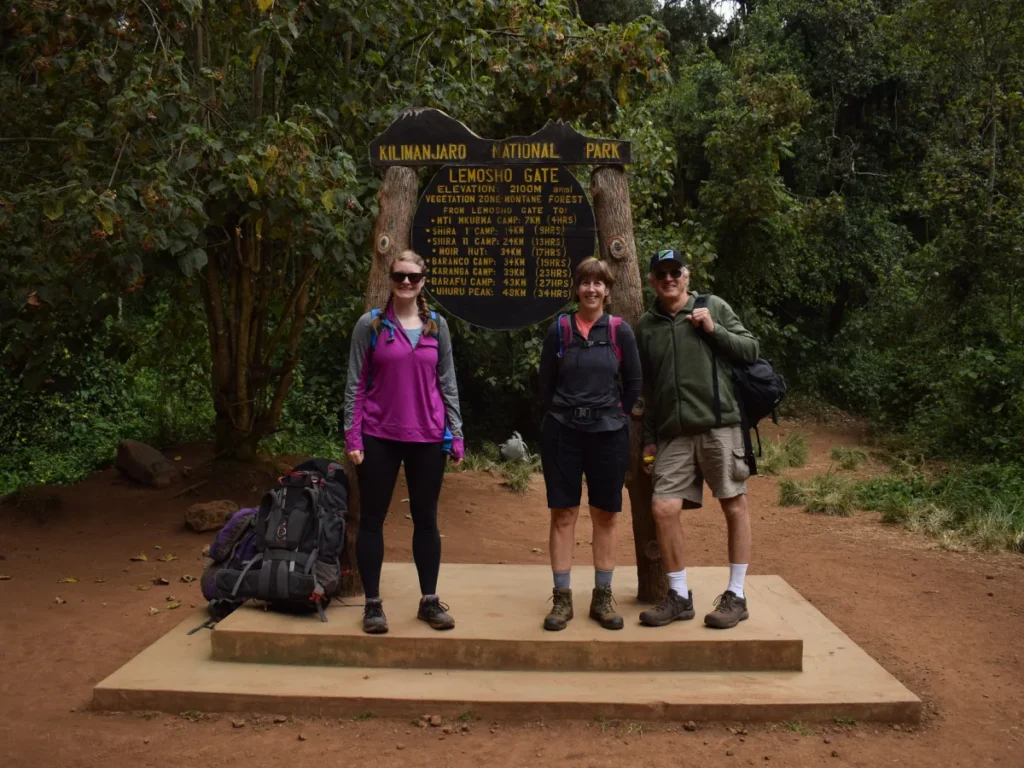
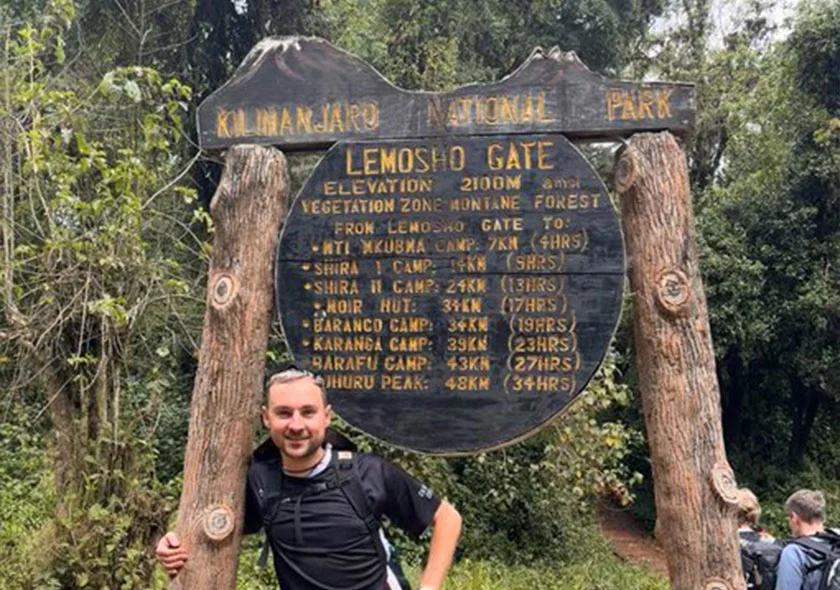
Lemosho Gate
Lemosho Gate is the official starting point of the celebrated Lemosho Route on Mount Kilimanjaro, Tanzania’s highest peak and the tallest freestanding mountain in the world. Nestled within the lush montane forests on the western slopes of Kilimanjaro, this gate serves as the entry portal for trekkers who have chosen what is widely regarded as one of the most scenic, diverse, and well-acclimatized pathways to the summit of Uhuru Peak at 5,895 metres (19,341 feet) above sea level.
The gate itself is managed by the Kilimanjaro National Park Authority (KINAPA), which operates under the Tanzania National Parks (TANAPA) system. All trekkers must register, present their permits, and receive safety briefings at Lemosho Gate before beginning their ascent. Park rangers stationed here conduct equipment checks and verify medical fitness documentation.
The surrounding environment at Lemosho Gate is strikingly biodiverse. Trekkers are immediately enveloped in thick rainforest teeming with colobus monkeys, hornbills, sunbirds, African buffalo, and a rich tapestry of endemic flora including giant tree heathers, mosses, and towering yellowwood trees. This vibrant ecosystem makes the first section of the Lemosho Route particularly memorable and sets it apart from gates on the drier eastern side of the mountain.
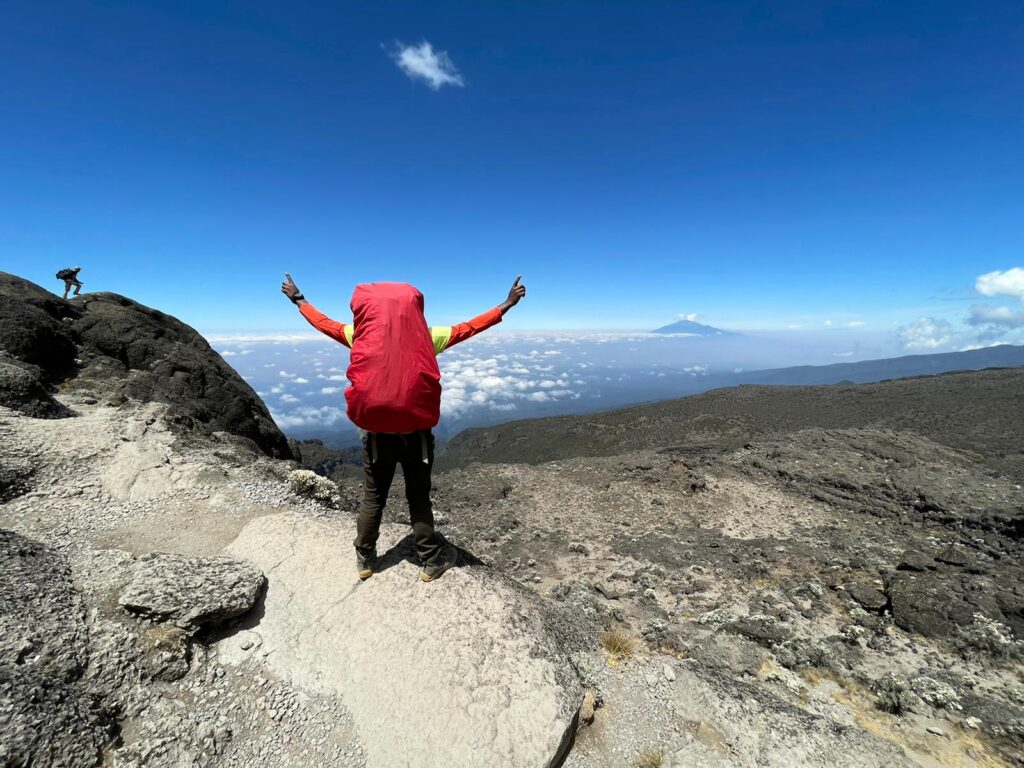
2. Lemosho Gate Elevation
One of the first questions that climbers and trekkers ask when planning their ascent is: What is the altitude of Lemosho Gate? Understanding the starting elevation is crucial for acclimatization planning and physical preparation.
Lemosho Gate Altitude | 2,100 metres (6,890 feet) above sea level |
Coordinates | 3°04’S, 37°16’E (approx.) |
Nearest Town | Londorossi, West Kilimanjaro |
Drive from Moshi | Approximately 3–3.5 hours by 4WD vehicle |
Drive from Arusha | Approximately 4–4.5 hours by 4WD vehicle |
Nearest Airport | Kilimanjaro International Airport (JRO) |
At 2,100 metres, Lemosho Gate sits at a noticeably lower elevation compared to some other Kilimanjaro trailheads such as Marangu Gate (1,980 m) or Rongai Gate (1,950 m). This lower starting point, combined with the route’s extended duration, allows for a more gradual elevation gain profile, which is clinically significant for reducing the risk of Acute Mountain Sickness (AMS).
The elevation profile from Lemosho Gate to Uhuru Peak rises across a vertical gain of approximately 3,795 metres. This progressive ascent, spread across seven to nine days, makes the Lemosho Route one of the most physiologically forgiving options on the mountain.
Elevation Gain by Camp (Lemosho Route)
Lemosho Gate | 2,100 m / 6,890 ft |
Big Tree Camp (Mti Mkubwa) | 2,650 m / 8,694 ft |
Shira 1 Camp | 3,500 m / 11,483 ft |
Shira 2 Camp | 3,840 m / 12,598 ft |
Lava Tower | 4,630 m / 15,190 ft |
Barranco Camp | 3,960 m / 12,992 ft |
Karanga Camp | 4,035 m / 13,238 ft |
Barafu Camp (Base Camp) | 4,673 m / 15,331 ft |
Uhuru Peak (Summit) | 5,895 m / 19,341 ft |
The characteristic ‘walk high, sleep low’ acclimatization profile is clearly visible in the elevation table above. The ascent to Lava Tower at 4,630 m followed by a descent to Barranco Camp at 3,960 m is a deliberate and scientifically endorsed strategy to stimulate red blood cell production while avoiding sustained exposure to extreme altitude. This is one of the physiological advantages that makes the Lemosho Route particularly effective for acclimatization.
3. Kilimanjaro Lemosho Route — 8 Days
The 8-day Lemosho Route is widely considered the optimal itinerary for most trekkers aiming to summit Kilimanjaro. It provides an extra acclimatization day compared to the standard 7-day version, significantly improving summit success rates. According to experienced operators, the 8-day route achieves summit success rates of 90% or higher for adequately prepared climbers, compared to roughly 70–80% on the 7-day version.
Day-by-Day Itinerary: 8-Day Lemosho Route
Day 1: Lemosho Gate to Big Tree Camp (Mti Mkubwa)
Start | Lemosho Gate — 2,100 m |
End | Big Tree Camp (Mti Mkubwa) — 2,650 m |
Distance | ~5 km |
Hiking Time | 3–4 hours |
Terrain | Dense rainforest |
Your Kilimanjaro adventure begins at Lemosho Gate after a morning drive from Moshi or Arusha through the small town of Londorossi. Following registration and equipment checks, the trail plunges immediately into the magical montane rainforest. The path is well-maintained but can be muddy, especially during the rainy seasons. Colobus monkeys are frequently spotted high in the canopy. Big Tree Camp is a beautiful forest clearing with a small stream nearby.
Day 2: Big Tree Camp to Shira 1 Camp
Start | Big Tree Camp — 2,650 m |
End | Shira 1 Camp — 3,500 m |
Distance | ~8 km |
Hiking Time | 4–6 hours |
Terrain | Forest transitioning to moorland and heath |
The forest gradually gives way to the open moorland of the Shira Plateau as the trail ascends steeply out of the tree line. Views of Kilimanjaro’s summit begin to appear on clear days. The trail crosses the rim of the plateau and the Shira caldera becomes visible. Shira 1 is a windswept camp with dramatic scenery and the first open views of the Shira Cathedral rock formation.
Day 3: Shira 1 to Shira 2 Camp
Start | Shira 1 Camp — 3,500 m |
End | Shira 2 Camp — 3,840 m |
Distance | ~7 km |
Hiking Time | 3–4 hours |
Terrain | Open moorland on the Shira Plateau |
This shorter day traverses the beautiful expanse of the Shira Plateau — an ancient volcanic caldera now filled with moorland vegetation including giant groundsels (Senecio kilimanjari), giant lobelias, and everlasting flowers. The walking is relatively gentle, making it an excellent acclimatization day. Shira 2 Camp lies at the foot of the dramatic Shira Cathedral and offers stunning views toward the Western Breach.
Day 4: Shira 2 to Barranco Camp via Lava Tower
Start | Shira 2 Camp — 3,840 m |
End | Barranco Camp — 3,960 m |
Lava Tower Altitude | 4,630 m (high point) |
Distance | ~10 km |
Hiking Time | 6–8 hours |
Terrain | Alpine desert, lava formations |
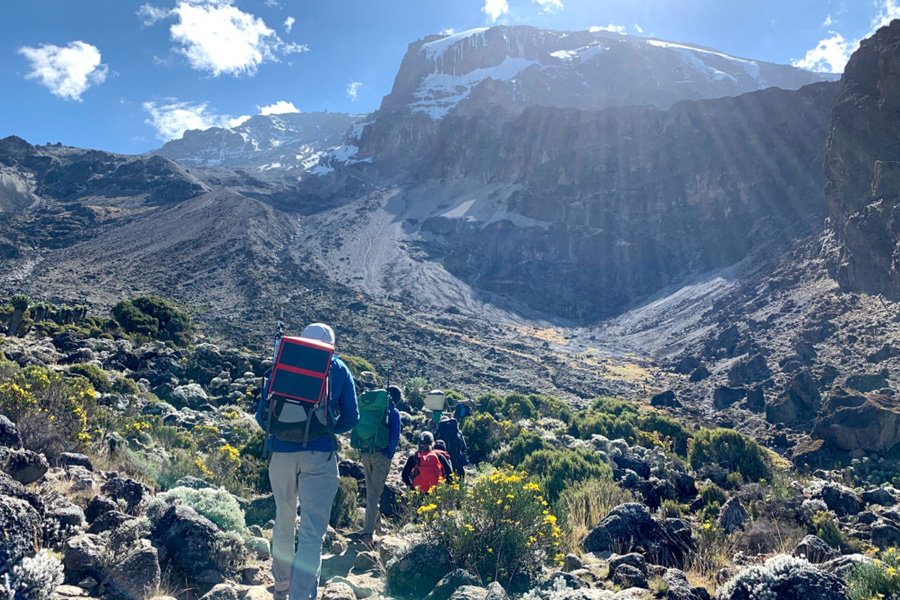
This is arguably the most strategically important day on the Lemosho Route. Trekkers climb to Lava Tower at 4,630 m for lunch — crossing the critical 4,500 m altitude threshold — before descending into the spectacular Barranco Valley. The descent to Barranco Camp is dramatic, passing through a landscape of giant groundsels and lobelia plants that have evolved remarkable adaptations to survive temperature extremes. The ‘climb high, sleep low’ principle in action here provides tremendous acclimatization benefits.
Day 5: Barranco Camp to Karanga Camp
Start | Barranco Camp — 3,960 m |
End | Karanga Camp — 4,035 m |
Distance | ~5 km |
Hiking Time | 4–5 hours |
Terrain | Barranco Wall scramble, then valley |
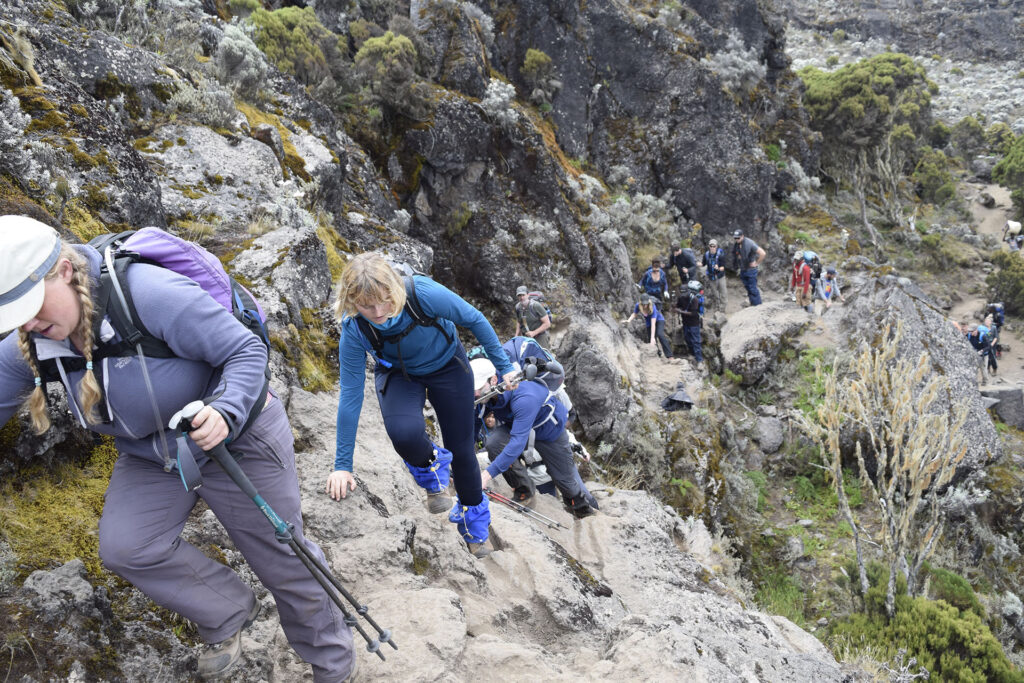
The day begins with the famous Barranco Wall — a near-vertical scramble of approximately 257 metres (840 ft) that is more challenging than difficult, requiring hands and feet but no technical climbing equipment. The scramble is thrilling and safe when conducted with a competent guide. After the wall, the trail traverses several ridges and valleys before reaching the small but well-positioned Karanga Camp. This extra night at Karanga (compared to a 7-day route) provides vital additional acclimatization.
Day 6: Karanga Camp to Barafu Base Camp
Start | Karanga Camp — 4,035 m |
End | Barafu Camp — 4,673 m |
Distance | ~4 km |
Hiking Time | 3–4 hours |
Terrain | Rocky alpine desert |
A relatively short but altitude-intensive day. The trail climbs steadily through the alpine desert zone, crossing rocky ridges until the imposing plateau of Barafu Base Camp comes into view. The camp sits exposed on a ridge between the Rebmann and Ratzel glaciers. Afternoon clouds typically roll in, and temperatures drop sharply after sunset. Trekkers receive extensive briefings about summit night procedures and rest through the afternoon and early evening before a midnight wake-up call.
Day 7: Summit Night — Barafu to Uhuru Peak, Descent to Mweka Camp
Start | Barafu Camp — 4,673 m (midnight departure) |
Summit | Uhuru Peak — 5,895 m |
End | Mweka Camp — 3,100 m |
Distance | ~5 km ascent + ~10 km descent |
Hiking Time | 6–8 hours ascent / 4–5 hours descent |
Terrain | Scree, ice, volcanic rock; steep |
The most demanding and rewarding day of the entire journey. Waking between midnight and 1:00 AM, trekkers don all their warmest layers and begin the punishing ascent by headlamp. Temperatures at this altitude can plummet to -15°C or lower, and wind chill can make it feel colder still. The trail zigzags steeply through loose volcanic scree, gaining approximately 1,200 metres of altitude. Stella Point (5,739 m) on the crater rim is reached first, where many trekkers experience the most significant AMS symptoms. From Stella Point, the final 45-minute walk along the crater rim to Uhuru Peak at 5,895 m is unforgettable. After celebrating at the iconic summit sign, the descent begins immediately, dropping all the way to Mweka Camp for the night.
Day 8: Mweka Camp to Mweka Gate — Descent & Celebration
Start | Mweka Camp — 3,100 m |
End | Mweka Gate — 1,640 m |
Distance | ~10 km |
Hiking Time | 3–4 hours |
Terrain | Forest trail |
The final morning descent through lush forest is a joyful procession. Legs are tired, but spirits soar. At Mweka Gate, park staff record completion, and certificates are distributed — a blue certificate for reaching Stella Point and the coveted gold certificate for those who reached Uhuru Peak. Transfer back to Moshi follows for hot showers and celebratory dinners.
4. How Difficult Is the Lemosho Route?
The Lemosho Route is rated as a Moderate to Strenuous trek. While it does not require any technical mountaineering skills, it is significantly more physically demanding than a typical multi-day hiking expedition. Understanding the sources of difficulty helps trekkers prepare appropriately.
Key Difficulty Factors
Altitude and Acclimatization
The single greatest challenge on Kilimanjaro — regardless of route — is altitude. Above 3,500 metres, the body begins to struggle with reduced oxygen levels (partial pressure of oxygen). Symptoms of Acute Mountain Sickness (AMS) include headaches, nausea, fatigue, dizziness, and loss of appetite. The Lemosho Route mitigates this risk through its gradual ascent profile and the inclusion of deliberate acclimatization days, but altitude sickness can still affect even the fittest trekkers.
Physical Fitness Requirements
Trekkers should be in good cardiovascular condition before attempting the Lemosho Route. Recommended pre-climb training includes:
- Running or brisk walking for 45–60 minutes, 4–5 times per week for at least 3 months prior
- Multi-day hiking with a loaded pack on varied terrain
- Stair climbing and leg-strengthening exercises
- Gradual altitude exposure through prior hill or mountain trekking if possible
- Consultation with a physician regarding altitude sickness medications such as Acetazolamide (Diamox)
The Barranco Wall
The Barranco Wall on Day 5 is a notable technical section. It involves hands-on scrambling over exposed volcanic rock, which can be unsettling for trekkers uncomfortable with heights. However, it is not a technical climb — ropes and harnesses are not required — and guides are experienced at assisting all fitness levels through this section safely.
Summit Night
Summit night is universally regarded as the hardest segment. The combination of extreme cold (temperatures can fall below -20°C with wind chill), darkness, oxygen deprivation, physical exhaustion, and the relentless steep gradient of the final push to Uhuru Peak tests every trekker’s resolve. Mental fortitude is as important as physical fitness on summit night.
Weather and Temperature Range
Lemosho Gate (rainforest) | 15–25°C during day; 10–15°C at night |
Shira Plateau (moorland) | 5–15°C during day; 0–5°C at night |
Barranco / Karanga | 0–10°C during day; -5–0°C at night |
Barafu Base Camp | -5–5°C during day; -10 to -15°C at night |
Uhuru Peak (summit) | -10 to -15°C during day; -20 to -30°C at night |
Overall Difficulty Rating
Compared to the world’s other major high-altitude treks (Nepal’s Everest Base Camp Trek, Peru’s Inca Trail, etc.), Kilimanjaro via the Lemosho Route is considered more challenging due to the sheer summit altitude of 5,895 m but more accessible due to the absence of technical climbing. On a scale of 1–10, experienced guides typically rate the 8-day Lemosho Route at a 7/10 for difficulty, with summit night scoring 9/10.
5. Cost to Climb Kilimanjaro — Lemosho 8 Days
One of the most frequently asked questions from prospective trekkers is: How much does it cost to climb Kilimanjaro via the Lemosho Route in 8 days? The total cost varies depending on the operator, group size, level of service, and additional expenses, but the following breakdown provides a comprehensive guide to realistic budgeting.
Park Fees (TANAPA — 2024/2025 Rates)
Kilimanjaro National Park fees are set by Tanzania National Parks and are non-negotiable. They are typically included in operator packages but should always be verified.
Conservation Fee (per night) | USD $70 per night × 7 nights = $490 |
Summit/Rescue Fee (one-off) | USD $20 |
Hut/Camping Fee (per night) | USD $50 per night × 7 nights = $350 |
Total Park Fees | Approximately USD $860–$1,000 per person |
Operator Package Costs
Licensed operators are required by TANAPA to handle all park fees, guides, porters, chefs, and camping equipment. Budget carefully and always verify that a company is KINAPA-registered.
Budget Operator (group trek) | USD $2,000 – $2,800 per person |
Mid-Range Operator | USD $2,800 – $3,800 per person |
Premium/Luxury Operator | USD $4,000 – $6,500+ per person |
Private / Bespoke Trek | USD $5,000 – $10,000+ per person |
What Is Typically Included
- All TANAPA park fees (conservation, camping, rescue)
- Licensed mountain guide and assistant guides
- Porters (typically 1.5–2 porters per trekker)
- Mountain chef and all meals (full board: breakfast, lunch, dinner, snacks)
- Camping equipment: tents, sleeping mattresses, dining tent, toilet tent
- Airport and hotel-to-gate transfers
- Rescue and emergency evacuation kit (oxygen, stretcher)
- Summit certificates from the national park
What Is Typically NOT Included
- International and domestic flights
- Travel insurance (mandatory — must cover high-altitude evacuation)
- Personal trekking equipment (boots, gaiters, sleeping bag, clothing layers)
- Tips for guides, porters, and kitchen staff (strongly expected culturally)
- Kilimanjaro-specific visa arrangements
- Pre- and post-climb hotel accommodation
- Alcoholic beverages and personal items
Tipping Guidelines
Lead Guide | USD $20–$30 per day (= $160–$240 for 8 days) |
Assistant Guide(s) | USD $10–$15 per day per guide |
Cook/Chef | USD $8–$12 per day |
Porters | USD $6–$10 per day per porter |
Total Tip Budget (estimate) | USD $200–$500+ per trekker (depending on group size) |
Tipping is a critically important part of the Kilimanjaro economy. Guides and porters earn significant portions of their annual income from summit tips. The Kilimanjaro Porters Assistance Project (KPAP) publishes tipping guidelines annually, and trekkers are strongly encouraged to follow them.
Total Realistic Budget
Operator Package (mid-range) | USD $3,200 |
Gear Purchase/Rental | USD $300–$600 |
Travel Insurance (high altitude) | USD $150–$350 |
Tips | USD $300 |
Accommodation (pre/post climb) | USD $100–$300 |
Miscellaneous | USD $100–$200 |
TOTAL ESTIMATE | USD $4,200 – $5,000+ per person |
6. Which Is the Hardest Route Up Kilimanjaro?
Kilimanjaro has seven official climbing routes: Marangu, Rongai, Umbwe, Lemosho, Machame, Northern Circuit, and Shira. Each has a distinct character in terms of difficulty, scenery, traffic, and acclimatization profile.
The Hardest Route: Umbwe Route
The Umbwe Route is unanimously considered the hardest route up Kilimanjaro. Here is why:
- It is the steepest and most direct route, gaining altitude extremely rapidly
- The acclimatization profile is the worst of all routes — the body has minimal time to adjust to altitude
- Summit success rates are the lowest of all routes, often below 60% for unprepared climbers
- It is recommended only for experienced high-altitude trekkers or mountaineers
- The short duration (5–6 days) dramatically increases AMS risk
- The terrain is steep, forested, and involves significant scrambling in places
Despite its difficulty, the Umbwe Route is used as the descent path for climbers attempting the technically demanding Western Breach approach to the summit crater.
Route Difficulty Comparison
Route | Duration | Difficulty | Summit Rate | Traffic |
Umbwe | 5–6 days | ★★★★★ | ~55–65% | Very Low |
Machame | 6–7 days | ★★★★☆ | ~80–85% | High |
Lemosho (7d) | 7 days | ★★★★☆ | ~80–85% | Medium |
Lemosho (8d) | 8 days | ★★★☆☆ | ~90–95% | Medium |
Northern Circuit | 9–10 days | ★★★☆☆ | ~90–95% | Low |
Marangu | 5–6 days | ★★★☆☆ | ~65–75% | Very High |
Rongai | 6–7 days | ★★★☆☆ | ~75–80% | Low |
The 8-day Lemosho Route sits comfortably in the upper tier for summit success rate while offering the richest diversity of scenery. The Northern Circuit (9–10 days) edges it slightly for acclimatization depth but is considerably more expensive and takes significantly longer.
7. Lemosho Gate Distance
Understanding the total distance of the Lemosho Route is important for physical preparation and daily pacing expectations. The Lemosho Route is one of the longer routes on Kilimanjaro, which contributes both to its higher success rate and its reputation for scenic grandeur.
Total Route Distance
Total Distance (Lemosho Gate to Uhuru Peak) | Approximately 56–65 km (35–40 miles) one way |
Total Distance (Round Trip to Mweka Gate) | Approximately 75–85 km (47–53 miles) |
Average Daily Distance (8-day route) | 8–12 km per hiking day |
Descent Route | Mweka Route (shared by Machame trekkers) |
It should be noted that raw distance figures can be misleading on high-altitude terrain. A 10 km section at 4,500 m of altitude feels dramatically harder than the same distance at sea level due to reduced oxygen, combined with the cumulative fatigue of multi-day trekking. Elevation gain is a more relevant metric than horizontal distance for assessing the challenge of each day.
Lemosho Gate to Moshi Distance
Lemosho Gate is located on the remote western side of Kilimanjaro, accessed via the town of Londorossi. The approach distances are:
Lemosho Gate to Moshi | ~90 km by road (3–3.5 hours by 4WD) |
Lemosho Gate to Arusha | ~130 km by road (4–4.5 hours by 4WD) |
Lemosho Gate to KIA Airport | ~120 km by road (3.5–4 hours) |
Road Condition | Paved to Londorossi; unpaved forest track to gate |
8. Lemosho Gate Hike — First Day Trail Guide
The hike from Lemosho Gate represents the beginning of one of the world’s great mountain journeys. The first section of trail from the gate is among the most enchanting on the entire route, and understanding what to expect helps trekkers fully appreciate the remarkable natural environment they are entering.
The Forest Zone: Lemosho Gate to Big Tree Camp
Immediately beyond the gate, the trail enters a pristine montane rainforest that has remained largely unchanged for centuries. This is the most biologically diverse section of the Lemosho Route, and the one most likely to reward patient and observant trekkers with remarkable wildlife encounters.
Flora of the Lemosho Forest Zone
- Podocarpus (East African yellowwood) — towering trees reaching 20–30 m height
- Hagenia abyssinica — draped in hanging mosses and lichens
- Giant tree heathers (Erica arborea) — begin appearing as you ascend
- Wild impatiens, begonias, and numerous epiphytic orchids
- Usnea lichen festooning the branches — a moisture indicator for the cloudforest
Wildlife of the Lemosho Forest Zone
- Black-and-white colobus monkeys (Colobus guereza) — frequently visible in canopy
- Blue monkeys (Cercopithecus mitis)
- African buffalo (Syncerus caffer) — present in the forest; guides maintain awareness
- Elephant (Loxodonta africana) — rare, but the area is part of their wider habitat
- Hartlaub’s turaco, silvery-cheeked hornbill, mountain buzzard
- Duiker antelope and bush pig
Trail Characteristics
The trail from Lemosho Gate is a single-track path through the forest with a steady but not steep gradient for the first hour, becoming more pronounced as it approaches the forest/heath transition. The surface is compacted earth and can be quite muddy, particularly during the April–May and November rainy seasons. Proper waterproof hiking boots with ankle support are non-negotiable.
The forest section typically takes between 3 and 4 hours at a comfortable trekking pace. Guides encourage the ‘pole pole’ (slowly, slowly in Swahili) philosophy from the very first steps — a psychological and physiological approach that conserves energy and respects the altitude ahead.
Best Time of Year to Begin the Lemosho Gate Hike
January–March | Excellent: dry, clear, cold nights — best months overall |
April–May | Rainy season: heavy forest rain, slippery trails — avoid if possible |
June–October | Very Good: cool and dry, excellent visibility |
November | Short rains: mixed conditions; still feasible |
December | Transitional; increasingly popular for year-end climbs |
January through March and June through October are broadly considered the two prime trekking windows for Kilimanjaro’s Lemosho Route. The dry seasons offer the clearest summit views, the most stable weather conditions, and the driest forest trails at the start of the hike from Lemosho Gate.
9. Practical Tips for Climbing the Lemosho Route
Essential Gear Checklist
- Hiking boots: waterproof, ankle-supporting, broken-in before the climb
- Sleeping bag: rated to at least -15°C (summit night temperatures)
- Base layers: thermal moisture-wicking tops and bottoms (2 sets)
- Mid layers: fleece or softshell jacket and trousers
- Outer shell: hardshell waterproof/windproof jacket and trousers
- Summit gear: down jacket, balaclava, neck gaiter, warm hat, liner gloves + outer mitts
- Trekking poles: strong recommendation; dramatically reduce knee strain on descent
- Headlamp: with fresh batteries and spare set (critical for summit night)
- Gaiters: for scree on upper mountain and mud in forest zone
- Sun protection: SPF 50+ sunscreen, UV-blocking sunglasses, sun hat
- Water containers: 3-litre capacity minimum; purification tablets as backup
Health and Medical Preparation
- Book a consultation with a travel medicine physician at least 6 weeks before departure
- Discuss Acetazolamide (Diamox) for AMS prevention; typical dosage 125–250 mg twice daily
- Ensure all routine vaccinations are up to date (Yellow Fever if transiting through relevant areas)
- Malaria prophylaxis for the Moshi/Arusha lowland areas
- Carry a basic first aid kit including ibuprofen, antihistamines, blister kit, and oral rehydration salts
Acclimatization Best Practices
- Arrive in Moshi or Arusha 1–2 days early to adjust to East African altitude (1,400–1,650 m)
- Stay well hydrated: 3–4 litres of water per day on the mountain
- Eat fully at every meal even when appetite is reduced — altitude suppresses hunger
- Never ascend with a headache; inform your guide of all symptoms honestly
- The descent is always the cure for serious AMS — never ignore worsening symptoms
10. Conclusion
Lemosho Gate stands as the doorway to one of Africa’s — and indeed the world’s — most extraordinary trekking experiences. From its forested slopes rich with wildlife to the austere beauty of the Shira Plateau, the dramatic Barranco Wall, and ultimately the life-changing moment of standing at Uhuru Peak on the roof of Africa, the Lemosho Route represents the complete Kilimanjaro experience.
The 8-day Lemosho itinerary offers the ideal balance of acclimatization depth, scenic diversity, summit success probability, and overall trekking experience. While it represents a significant financial investment — typically USD $4,000–$5,000+ including all expenses — the memories, personal achievement, and perspective gained from summiting Africa’s highest mountain are, for most trekkers, genuinely priceless.
Prepare thoroughly. Choose a reputable, KINAPA-licensed operator. Respect the mountain, your guides, and your fellow trekkers. Walk pole pole. And when you reach Uhuru Peak, take a long, deep breath of the thin high-altitude air and absorb the extraordinary privilege of standing at 5,895 metres above sea level on the continent of Africa.
Kilimanjaro awaits.