7 days Lemosho Route, Climbing Kilimanjaro
Mount Kilimanjaro is Africa’s highest peak and the world’s tallest free-standing mountain, rising majestically to 5,895 metres (19,341 feet) above sea level in northeastern Tanzania. A dormant stratovolcano composed of three distinct volcanic cones — Kibo, Mawenzi, and Shira — Kilimanjaro has captivated explorers, adventurers, and mountaineers since the first recorded summit in 1889 by Hans Meyer and Ludwig Purtscheller.
Unlike technical high-altitude peaks, Kilimanjaro requires no ropes or mountaineering skills, making it one of the most accessible high-altitude adventures on Earth. Yet do not underestimate it — altitude sickness, rapidly changing weather, and the sheer physical demand of the climb test the endurance and mental fortitude of even experienced trekkers. Every year, over 35,000 climbers attempt the summit, with success rates varying dramatically depending on the route chosen, the pace of ascent, and individual acclimatisation.
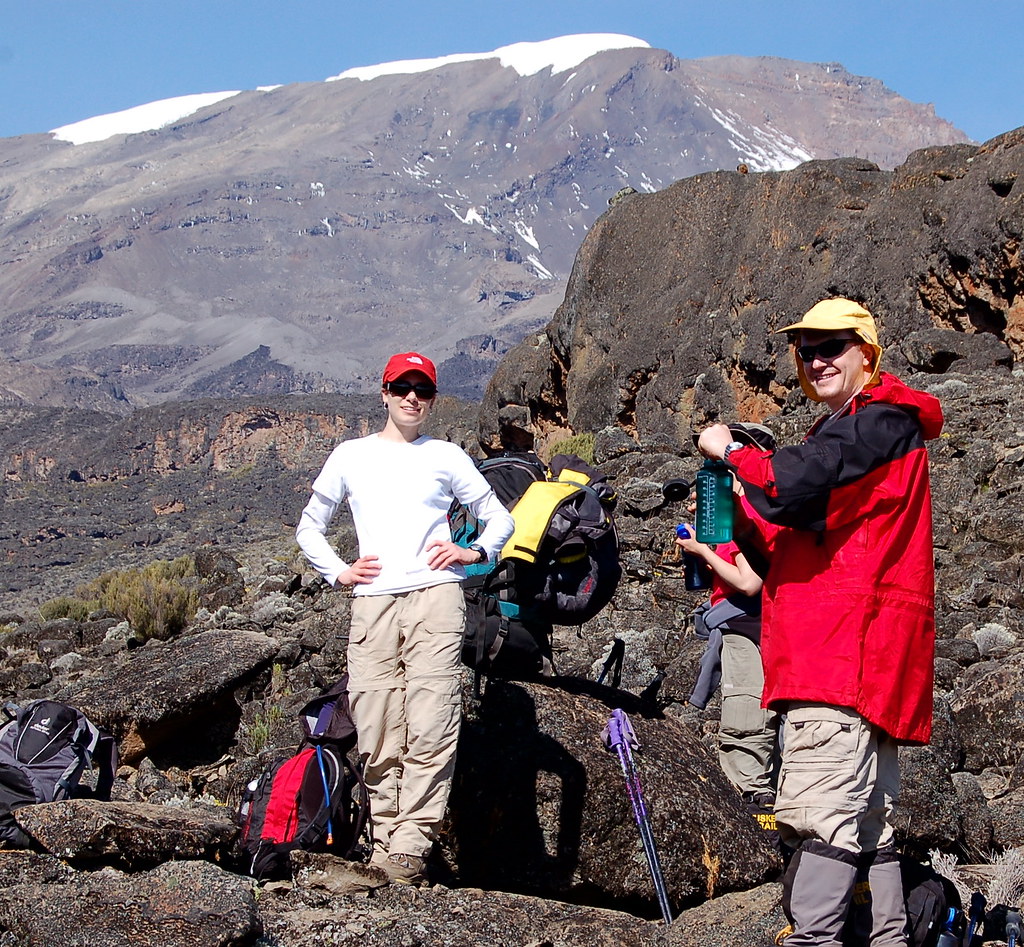
The Lemosho Route — widely regarded as the most scenic and rewarding path to the summit — has risen to become the gold standard among serious trekkers. Its generous acclimatisation profile, stunning wilderness traversal, and relatively low traffic make it the preferred choice for those who want the best possible chance of success without sacrificing the magic of the journey.
Why Choose the Lemosho Route?
Among Kilimanjaro’s eight established routes, the Lemosho Route stands apart for several compelling reasons:
- Unmatched Acclimatisation: The seven-day itinerary provides superior altitude gain management compared to shorter routes, significantly reducing the risk of acute mountain sickness (AMS).
- Exceptional Scenery: Lemosho traverses five distinct ecological zones, from lush rainforest to otherworldly alpine desert, offering extraordinary diversity of landscapes.
- Wilderness Experience: The route begins on the remote Shira Plateau, far from more crowded starting points, providing a genuine sense of adventure and solitude.
- High Summit Success Rates: The 7-day version consistently achieves summit success rates of 85-90%, substantially higher than shorter 5- or 6-day routes on any path.
- Wildlife Encounters: The lower forested sections are home to colobus monkeys, elephants, and remarkable birdlife rarely encountered on other routes.
- Joins Machame Route: After Lava Tower, Lemosho merges with the Machame Route, creating a shared community of trekkers on the high-altitude sections.
Route Type | Non-technical trek; no ropes or crampons required |
Starting Gate | Londorossi Gate, elevation 2,360 m |
Summit | Uhuru Peak, Kibo Crater, 5,895 m |
Total Distance | Approximately 70 kilometres (43 miles) |
Best Months | January-March and June-October |
Difficulty | Strenuous – requires good cardiovascular fitness |
Group Size | Typically 2-12 trekkers per group |
Crew Ratio | Usually 2-3 guides and porters per trekker |
The Five Ecological Zones
One of the extraordinary aspects of climbing Kilimanjaro via the Lemosho Route is passing through five dramatically different ecological zones within a single week. This vertical journey from tropical forest floor to arctic summit is often described as travelling from the Equator to the North Pole in seven days.
1. Cultivation Zone (800-1,800 m)
Surrounding the lower slopes are the shambas — smallholder farms and villages of the Chagga people, who have cultivated these rich volcanic soils for centuries. Coffee, banana, and maize plantations dominate the landscape. Trekkers on the Lemosho Route drive through this zone to reach the gate and rarely hike within it.
2. Montane Forest Zone (1,800-2,800 m)
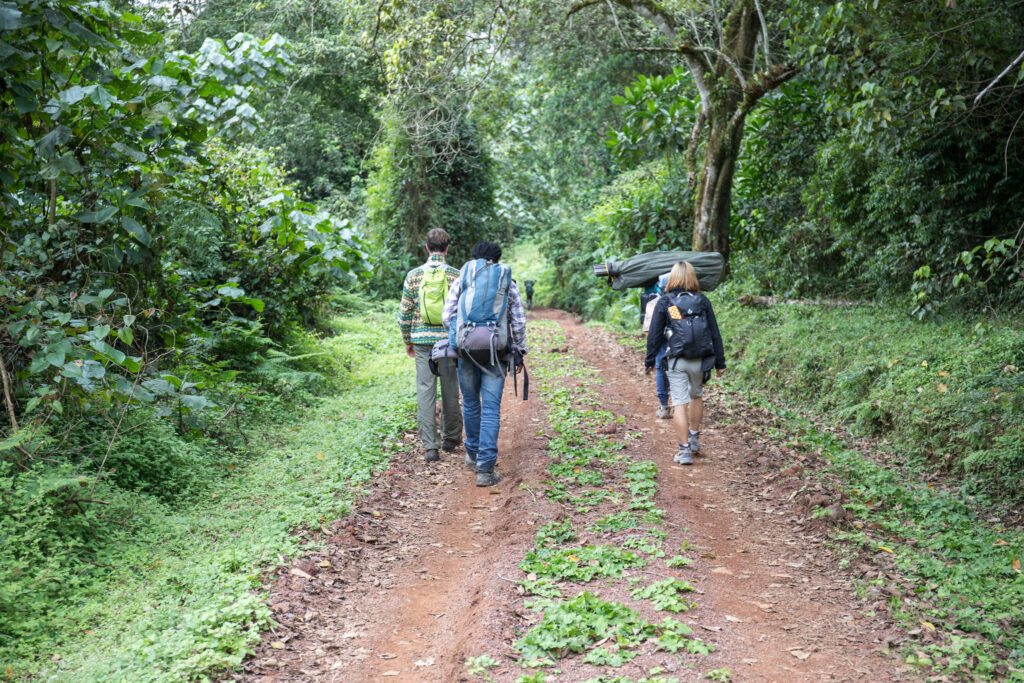
The first hiking zone on Lemosho is dense, primeval rainforest. Ancient Podocarpus trees draped in old-man’s beard lichen create a cathedral-like canopy. The forest is alive with the calls of Hartlaub’s turaco and the crashing of colobus monkeys. Elephant and buffalo tracks are frequently spotted on the trail. Morning mists rolling through the forest create an almost supernatural atmosphere.
3. Heather & Moorland Zone (2,800-4,000 m)
As the forest thins, it gives way to open heathland dominated by giant heather trees (Erica arborea). The landscape opens dramatically, with expansive views across Tanzania’s plains. Giant lobelias and groundsels — plants found nowhere else on Earth at this altitude — begin to appear, creating a landscape of remarkable botanical strangeness.
4. Alpine Desert Zone (4,000-5,000 m)
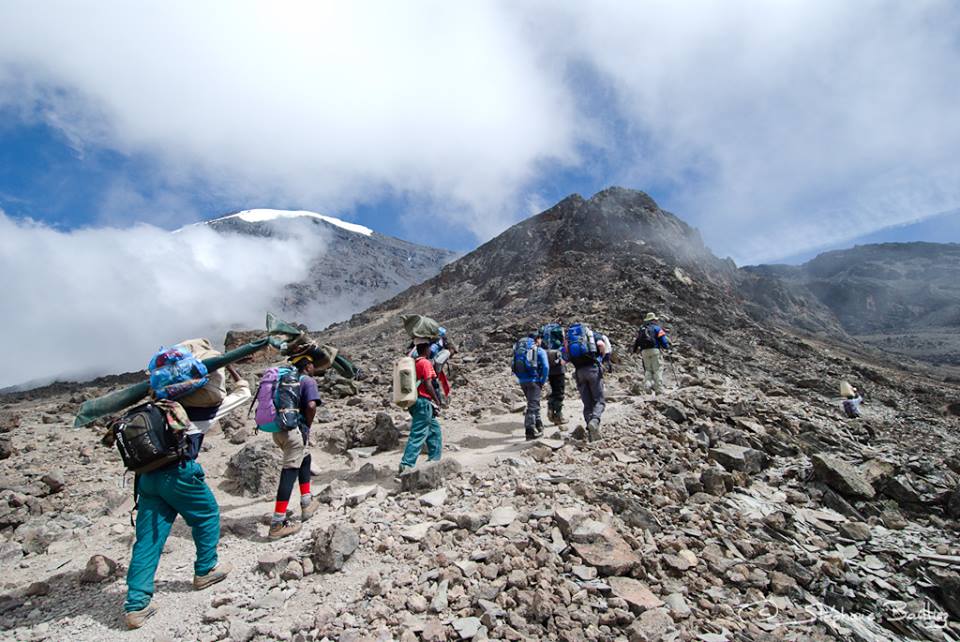
Above the moorland, vegetation becomes sparse and skeletal. The landscape transitions to a stark, arid plateau strewn with volcanic rocks and scree. Days can be surprisingly warm in direct sunlight while temperatures plunge to -10 degrees C or below at night. This is where altitude sickness becomes the primary challenge for most trekkers.
5. Arctic Summit Zone (5,000-5,895 m)
The final zone — the volcanic crater and summit glaciers — is a world of permanent ice, snow, and silence. The glaciers of Kilimanjaro, though retreating due to climate change, remain awe-inspiring. The crater rim and Uhuru Peak are swept by fierce winds and temperatures that can plummet to -20 degrees C. Every step at this altitude requires deliberate, measured effort.
Day-by-Day Itinerary
The following seven-day itinerary represents the standard schedule used by reputable operators on the Lemosho Route. Times, distances, and altitude figures are approximate and will vary based on individual pace, group fitness, and weather conditions.
Day 1: Londorossi Gate to Big Tree Camp
Detail | Information |
Distance | 7 km (4.3 miles) |
Elevation Gain | 2,360 m to 2,780 m (+420 m) |
Hiking Time | 3-4 hours |
Terrain | Rainforest trails, moderate gradient |
Camp | Big Tree Camp (Mti Mkubwa) |
Your Kilimanjaro adventure begins at Londorossi Gate, a remote gate on the western slopes accessed by a long drive from Moshi or Arusha. Park rangers register your climbing permit and conduct equipment checks, a process that typically takes 1-2 hours. Use this time to organise your daypack, meet your guides and porters, and mentally prepare for the week ahead.
The first day’s hiking is a gentle introduction to the mountain. The trail winds through primary rainforest so dense that the canopy filters out most sunlight, creating a cool, dappled world of remarkable biodiversity. The path is well-marked but can be muddy in wet conditions. Listen for the distinctive bark of black-and-white colobus monkeys in the upper canopy and watch for iridescent sunbirds in flowering shrubs along the trail.
Big Tree Camp takes its name from the enormous Podocarpus trees that tower over the campsite. The camp sits at 2,780 metres in a forest clearing with basic toilet facilities. Your chef and porters will have arrived ahead of you to prepare camp and cook a nourishing meal. Tonight, your lead guide will discuss the days ahead and answer initial questions.
Packing tip for Day 1: Rain gear should be at the top of your daypack. The rainforest receives precipitation year-round, and afternoon showers are common regardless of season.
Day 2: Big Tree Camp to Shira 1 Camp
Detail | Information |
Distance | 9 km (5.6 miles) |
Elevation Gain | 2,780 m to 3,505 m (+725 m) |
Hiking Time | 5-6 hours |
Terrain | Forest transitioning to open heathland and moorland |
Camp | Shira 1 Camp |
Day two is one of the most scenically varied days on the entire route. You begin in the forest, and within a couple of hours the vegetation undergoes a dramatic transformation. The towering trees give way to giant heather, then open moorland, and finally the sweeping plateau of the Shira Caldera — the eroded remnants of Kilimanjaro’s oldest and westernmost volcanic cone.
The moment you emerge from the treeline onto the Shira Plateau is genuinely breathtaking. Suddenly the sky opens up, Kibo’s glacier-clad summit pyramid appears to the east, and the scale of the mountain becomes comprehensible for the first time. The plateau stretches over 15 square kilometres and is one of the highest plateaux on the African continent.
The afternoon hike across the plateau to Shira 1 Camp can be challenging if weather turns. Afternoon cloud and mist frequently roll in from the west. The camp sits in open moorland with no tree cover — temperatures drop sharply after sunset. Expect your first genuinely cold night here, with temperatures often dipping to 0 degrees C or below.
Tonight’s dinner is an important occasion — your lead guide will brief you on the days ahead, discuss altitude sickness symptoms and prevention, and confirm the plan for coming days. Pay close attention. Understanding the signs of AMS could save your summit bid.
TIP: Acclimatisation Strategy On Day 2, you gain over 700 metres in elevation. Begin practising the ‘climb high, sleep low’ principle. Stay well hydrated — aim for 3-4 litres of water per day from this point onwards. Avoid alcohol completely throughout the trek. |
Day 3: Shira 1 Camp to Shira 2 Camp (via Shira Cathedral)
Detail | Information |
Distance | 9 km (5.6 miles) |
Elevation Gain | 3,505 m to 3,840 m (+335 m) |
Hiking Time | 4-5 hours |
Terrain | Open moorland plateau, rocky outcrops |
Camp | Shira 2 Camp |
Day three is a relatively gentle acclimatisation day spent traversing the Shira Plateau. The morning hike heads east across rolling moorland studded with giant senecios and lobelia, giving you ample time to appreciate the surreal beauty of this high-altitude ecosystem. Many groups take an optional acclimatisation hike to Shira Cathedral (3,872 m), a dramatic rock formation offering superb views of Kibo’s summit and the entire plateau.
This acclimatisation detour is strongly recommended — gaining extra altitude during the day while sleeping slightly lower tonight significantly improves your body’s red blood cell production and oxygen-carrying capacity. Even if you feel well, altitude sickness can strike without warning at higher elevations, and every extra day your body spends adjusting improves your summit odds considerably.
By Shira 2 Camp, you are above 3,800 metres, and some trekkers begin to notice the first subtle effects of altitude: slight headaches, reduced appetite, and interrupted sleep. These are normal at this elevation. Drink plenty of water, avoid alcohol, eat as much as you can manage, and rest early.
Wildlife note: The Shira Plateau is home to eland — Africa’s largest antelope — as well as buffalo, which occasionally venture up from lower elevations. Keep a respectful distance from any wildlife encountered.
Day 4: Shira 2 Camp to Barranco Camp (via Lava Tower)
Detail | Information |
Distance | 11 km (6.8 miles) |
Elevation Profile | 3,840 m to 4,630 m (Lava Tower) down to 3,976 m (Barranco) |
Hiking Time | 7-8 hours |
Terrain | Alpine desert, volcanic scree, spectacular geological features |
Camp | Barranco Camp |
Day four is the most critical day for acclimatisation on the entire route and follows the ‘climb high, sleep low’ principle to perfection. You hike upwards through the increasingly stark alpine desert to Lava Tower — a 300-metre-tall volcanic plug at 4,630 metres — before descending into the spectacular Barranco Valley to camp at 3,976 metres.
The morning ascent to Lava Tower is where the altitude becomes a genuine physical presence. Many trekkers feel significantly more breathless here than on previous days, and headaches and nausea are common. This is entirely normal. The key is to walk slowly — the guide’s mantra ‘pole, pole’ (Swahili for ‘slowly, slowly’) becomes your most important strategy. Take short, deliberate steps and breathe deeply and rhythmically.
Lunch at Lava Tower is followed by the afternoon descent into the Great Barranco Valley, one of the most dramatic landscapes on the mountain. As you drop in altitude, you will almost certainly notice an improvement in how you feel. The valley contains some of the most spectacular stands of giant groundsels and lobelias on the mountain, creating an otherworldly, prehistoric atmosphere.
Barranco Camp sits below the towering Barranco Wall — a 300-metre near-vertical cliff face that must be climbed on Day 5. Study the wall from camp and mentally prepare for tomorrow’s challenge. The camp is one of the most beautiful on the mountain, sheltered in the valley with magnificent views of Kibo’s south face.
TIP: Managing Altitude Sickness Symptoms of AMS include persistent headache, nausea, vomiting, and dizziness. If symptoms are severe — especially loss of coordination, severe confusion, or coughing frothy pink sputum — immediate descent is mandatory. Never ascend with symptoms of AMS. Discuss Diamox (acetazolamide) preventive use with your doctor before the trip. |
Day 5: Barranco Camp to Karanga Camp
Detail | Information |
Distance | 5 km (3.1 miles) |
Elevation Gain | 3,976 m to 4,035 m (net, after Barranco Wall climb and descent) |
Hiking Time | 4-5 hours |
Terrain | The Barranco Wall scramble; rocky valleys; exposed ridge |
Camp | Karanga Camp |
Day five begins with the most memorable and celebrated section of the entire Lemosho Route — the ascent of the Barranco Wall. At first glance from camp, the wall appears impossibly vertical, and many trekkers feel apprehension at breakfast. In practice, while the scramble requires the use of hands and feet at several points, there is no technical climbing involved. Guides and porters are extraordinarily adept at assisting trekkers through the tricky sections.
The wall climb takes approximately 1.5-2 hours and involves navigating rock ledges, narrow gullies, and short scrambling sections. There is one particularly famous spot — the ‘Kissing Rock’ — where the trail narrows dramatically against a rock face and trekkers must press close to the rock to pass. The wall is typically busy in the morning as multiple groups ascend simultaneously.
The reward at the top of the Barranco Wall is an extraordinary panorama. You can see across the Shira Plateau, down to the lowlands of Tanzania, and along the entire southern ice fields of Kibo. It is one of the great viewpoints on the entire mountain. From the top, the trail continues across several more valleys and ridgelines before descending to Karanga Camp.
Karanga Camp is a small but well-located camp at 4,035 metres, sheltered in a valley with a seasonal stream — one of the last reliable water sources before the summit. The afternoon and evening here are important: eat well, hydrate aggressively, and sleep as much as possible. This additional stop significantly improves summit success rates compared to skipping directly to Barafu.
Day 6: Karanga Camp to Barafu to Summit to Mweka Camp
Detail | Information |
Distance | Summit night: 5 km ascent; 12 km descent to Mweka |
Elevation | 4,035 m to 4,673 m (Barafu) to 5,895 m (Uhuru) to 3,068 m (Mweka) |
Hiking Time | 5-7 hours to summit; 5-6 hours descent |
Terrain | Alpine desert scree to summit snowfield; steep descent through heathland |
Camp | Mweka Camp (Millennium Camp) |
Day six is the longest, most demanding, and most emotionally charged day of the entire climb. It begins with a morning hike from Karanga to Barafu Camp — the final high camp at 4,673 metres — where you arrive by mid-morning, eat lunch, and attempt to rest before the summit push. The word ‘Barafu’ means ‘ice’ in Swahili, a testament to the cold and altitude of this exposed plateau.
Most trekkers struggle to sleep in the afternoon at Barafu. The altitude, anticipation, and wind conspire against rest. Even a few hours of fitful dozing is beneficial. Your guides will wake you at around 11:00 PM for summit night. Eat whatever you can manage — hot tea, porridge, biscuits — even if your appetite is suppressed by altitude.
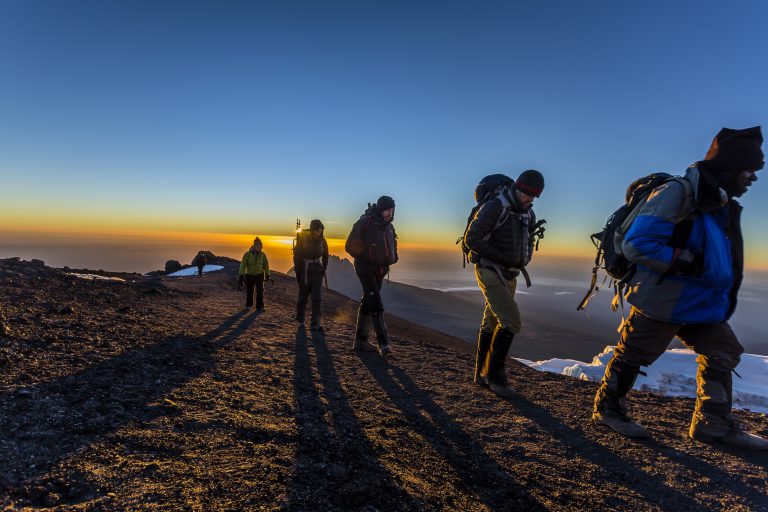
The summit push begins between midnight and 1:00 AM under headlamp. The trail ascends steeply through loose scree and volcanic rock, following a zigzagging path towards Stella Point on the crater rim (5,756 m). This section — approximately 1,200 vertical metres in 5-7 hours — is the hardest, coldest, and most mentally demanding part of the entire climb. Temperatures regularly drop to -15 degrees C or below, and the wind can be brutal.
The key to the summit night is pace. Walk impossibly slowly. Your guide will set a pace that feels almost stationary — trust it completely. Attempting to move faster burns through your oxygen reserves and leads to sudden exhaustion. Focus on your breathing: breathe in through your nose, out through your mouth in a steady, rhythmic pattern. Count steps. Keep moving.
Stella Point on the crater rim is a major psychological milestone. From here, the final section to Uhuru Peak follows the rim around the crater past the famous Rebmann Glacier. The sunrise, which typically occurs just as trekkers reach Stella Point, is one of the most extraordinary natural spectacles on Earth — a panoramic pink-and-gold explosion of light across the curvature of Africa.
Uhuru Peak — ‘Freedom Peak’ in Swahili — is the highest point in Africa at 5,895 metres. The famous sign reads: ‘Congratulations! You are now at Uhuru Peak, Tanzania.’ Most trekkers report a complex emotional response: euphoria, tears, disbelief, profound exhaustion, and an urgent desire to descend. Allow yourself a few minutes to photograph, absorb the achievement, and look into the crater where the remnant glaciers glow turquoise in the morning light.
The descent is long and physically punishing on the knees. From Uhuru, you descend rapidly — initially back to Barafu for a rest and meal, then continuing down all the way to Mweka Camp (Millennium Camp) at 3,068 metres. The descent through the heathland in the afternoon, when the altitude sickness recedes and the air thickens, is an almost intoxicating experience of recovery and relief.
TIP: Summit Night Essentials Layer aggressively: base layer, mid-layer fleece, down jacket, waterproof shell. Hand warmers in gloves and boot warmers inside boots. Keep a Nalgene hot water bottle inside your sleeping bag liner against your torso. Your camera battery will die in the cold — keep it inside your jacket. Water bottles will freeze — keep them insulated with a sock or cover. |
Day 7: Mweka Camp to Mweka Gate (Descent and Celebration)
Detail | Information |
Distance | 10 km (6.2 miles) |
Elevation Loss | 3,068 m to 1,640 m (-1,428 m) |
Hiking Time | 3-4 hours |
Terrain | Forest trail, moderate descent |
End Point | Mweka Gate — the finish line |
The final day is both a celebration and a gentle goodbye to the mountain. The morning descent through the montane forest on the Mweka Trail is a journey back through the ecological zones in reverse — the vegetation thickening, the air warming, the bird calls multiplying, and the oxygen levels rising with every downward step. Most trekkers are surprised by how quickly they recover; conversations become more energetic, appetites return, and laughter comes easily.
At Mweka Gate, you receive your official Kilimanjaro Summit Certificate — a green certificate for reaching Stella Point and a gold certificate for reaching Uhuru Peak. Your porters and guides will gather for the traditional tip ceremony — a vital occasion, as tips constitute the majority of income for the incredible team that made your summit possible.
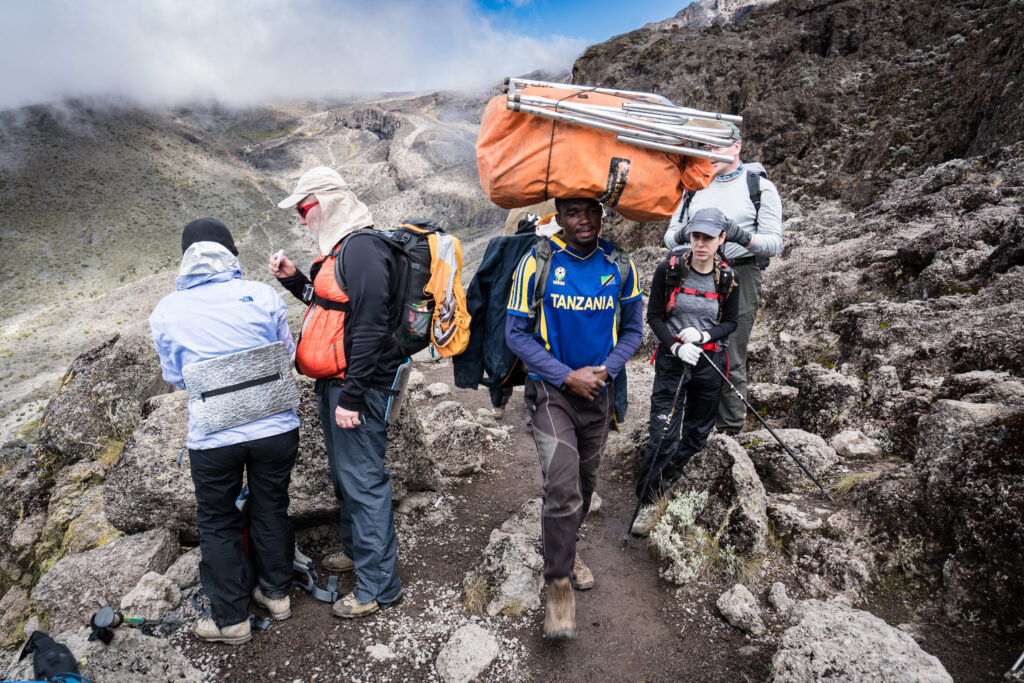
It is difficult to overstate the contribution of the Kilimanjaro crew. A typical trekker requires 6-8 porters and guides who carry camp equipment, food, and supplies up the mountain in extraordinary conditions, often wearing inadequate clothing and footwear. Tipping generously is both a moral obligation and an act of genuine gratitude for their heroic work.
Recommended tip guidelines (per trekker, 7-day climb): Lead guide: USD $80-100; Assistant guides: USD $50-70 each; Cook: USD $40-50; Porters: USD $25-35 each. Tips are given in sealed envelopes addressed to each role.
Comprehensive Preparation Guide
Physical Training
Kilimanjaro is not technically demanding, but it is physically strenuous. Begin a structured training programmed at least three to four months before your climb. The most important attributes to develop are cardiovascular endurance, leg strength, and the mental resilience to keep moving when tired.
- Cardiovascular Training: Weekly long hikes of 15-25 km with elevation gain. Trail running, cycling, and swimming are excellent supplementary exercises. Work up to sustained 6-8 hour hiking days carrying a 10 kg pack.
- Strength Training: Focus on quad, hamstring, glute, and calf strength for the descents, which are more damaging to joints than ascents. Stair climbing, lunges, step-ups, and single-leg exercises are particularly useful.
- Altitude Simulation: If possible, hike at altitude in the weeks before the climb. Even a single weekend on a 3,000+ metre peak provides invaluable physiological preparation and builds confidence.
- Stretching and Flexibility: Hip flexors, IT bands, and calves take significant strain on long descents. A consistent stretching routine reduces injury risk significantly and improves recovery.
Essential Gear Checklist
The Lemosho Route passes through five ecological zones with dramatically different conditions. Packing the right gear is essential for safety and comfort on the mountain.
Clothing & Footwear | Equipment & Accessories |
• Waterproof hiking boots (broken in) • Waterproof gaiters • Wool or synthetic socks (x5 pairs) • Moisture-wicking base layers (x2) • Insulating mid-layer fleece • Down jacket (-10C rated minimum) • Waterproof jacket and trousers • Thermal underwear • Summit gloves (expedition-weight) • Liner gloves • Warm beanie and balaclava • Sun hat and sunglasses (UV400) | • Trekking poles (collapsible) • Sleeping bag (-15C rated) • Sleeping bag liner • Headlamp (x2) with extra batteries • Daypack 25-35 litres • Duffel bag for porters (max 15 kg) • Water bottles or hydration bladder (3L) • Water purification tablets • High SPF sunscreen (SPF 50+) • Altitude medication (consult doctor) • First aid kit and blister treatment • Toilet paper and hand sanitiser |
Nutrition and Hydration Strategy
Nutrition on Kilimanjaro is managed almost entirely by your operator’s chef, who prepares three hot meals daily plus afternoon tea and snacks. However, your personal food and hydration strategy for the trail hours is critically important.
- Water: Drink 3-4 litres per day minimum, more at altitude. Your urine should be pale straw colour. Dark yellow urine signals dehydration, which significantly exacerbates altitude sickness symptoms.
- Summit Night Fuel: Bring high-energy, easy-to-eat snacks that will not freeze solid: energy gels, chocolate-covered nuts, peanut butter crackers, dried mango. Avoid anything that might be rendered unpalatable by cold and nausea.
- Electrolytes: Altitude diuresis — increased urination at altitude — depletes electrolytes rapidly. Electrolyte tablets or powders mixed into your water replace essential sodium, potassium, and magnesium.
- Appetite Management: Most trekkers experience reduced appetite above 4,000 metres. Force yourself to eat — your body requires far more calories than it is demanding. High-altitude fatigue is partly caloric deficit.
Health and Medical Considerations
A pre-climb medical consultation is strongly recommended, particularly for trekkers over 50, those with cardiovascular or respiratory conditions, or a history of altitude sickness. Share your intended itinerary with your doctor and discuss the following:
- Acetazolamide (Diamox): A medication that accelerates acclimatisation by stimulating faster breathing. Standard preventive dose is 125-250 mg twice daily, starting 24-48 hours before ascent. Side effects include increased urination and tingling in the extremities.
- Travel Insurance: Non-negotiable. Ensure your policy explicitly covers high-altitude trekking above 5,000 metres and helicopter evacuation from remote mountain terrain.
- Vaccinations: Consult a travel health clinic regarding yellow fever, typhoid, hepatitis A and B, meningitis, and malaria prophylaxis for the Tanzania lowlands before and after the climb.
Practical Information and Logistics
Getting to Kilimanjaro
Kilimanjaro International Airport (JRO) is the primary gateway, with flights from Nairobi, Dar es Salaam, Zanzibar, Addis Ababa, and Amsterdam, with connections from major international hubs. Most trekkers fly into Kilimanjaro or Nairobi and transfer by road to Moshi or Arusha, which serve as the main staging towns. Moshi is closer to the mountain and preferred by most operators; Arusha offers more accommodation and dining options.
Permits and Fees
All Kilimanjaro climbers must be accompanied by a licensed guide and must pay park fees, which are included in virtually all operator packages. As of 2024, approximate fees include:
Conservation Fee | USD $70 per day (7 days = $490) |
Camping Fees | USD $50 per night (6 nights = $300) |
Rescue Fee | USD $20 per trip (one-time charge) |
Guide and Crew Fees | Included in operator package |
Total Park Fees (approx.) | Approximately USD $810 per person |
Total operator packages for a 7-day Lemosho Route trek including transfers, accommodation, equipment, meals, guides, and park fees typically range from USD $2,500-$4,500 per person depending on operator quality, group size, and season.
Best Time to Climb
Kilimanjaro can be climbed year-round, but conditions vary significantly by season. There are two main dry seasons — January to mid-March and June to October — which are generally preferred for clearer skies and better trail conditions.
January to March | Dry, clear skies, cold nights; January-February often ideal |
April to May | Long rainy season; wet, muddy, less visibility; not recommended |
June to October | Best overall conditions; cool and dry; peak season in July-August |
November to December | Short rains; improving by December; festive season crowds |
Choosing a Reputable Operator
Your choice of operator is perhaps the single most important decision you will make about your Kilimanjaro climb. A good operator provides experienced certified guides, high-quality camping equipment, nutritious food, a safety protocol including pulse oximetry monitoring, and fair wages for porters. Look for operators accredited by the Kilimanjaro Association of Tour Operators (KIATO) or certified by the Kilimanjaro Porters Assistance Project (KPAP), which certifies operators who treat porters ethically.
Be wary of budget operators offering dramatically lower prices — these often cut corners on equipment quality, reduce trekking staff, and may underpay or mistreat porters. A few hundred dollars saved on a multi-thousand-dollar adventure is rarely worth the compromises in safety, experience quality, and ethical treatment of your crew.
Conclusion: The Mountain That Changes You
There is a reason that experienced mountaineers and first-time adventurers alike hold Kilimanjaro in such reverence. It is not simply the altitude, though standing at 5,895 meters on the roof of an entire continent is extraordinary. It is not merely the scenery, though the Lemosho Route’s traverse of five ecological zones offers vistas of unparalleled beauty. It is the journey itself — seven days of walking through a world increasingly stripped of complexity, until what remains is simply you, the mountain, and the next step.
Kilimanjaro teaches patience. The guides say ‘pole, pole’ — slowly, slowly — and they are speaking not just about the pace of your feet but about a philosophy of movement through difficulty. The trekkers who reach Uhuru Peak are rarely the fittest or the most experienced. They are the ones who pace themselves intelligently, listen to their bodies, eat when they are not hungry, drink when they are not thirsty, and keep moving when every instinct screams to stop.
The Lemosho Route is the finest way to climb this magnificent mountain. Its extended acclimatisation, wilderness character, and extraordinary diversity of terrain make it not merely a means to reach a summit but an adventure worthy of the mountain itself. Go slowly. Go well. And when you reach that battered wooden sign at Uhuru Peak, allow yourself to feel the full weight of what you have achieved.