Mweka Gate
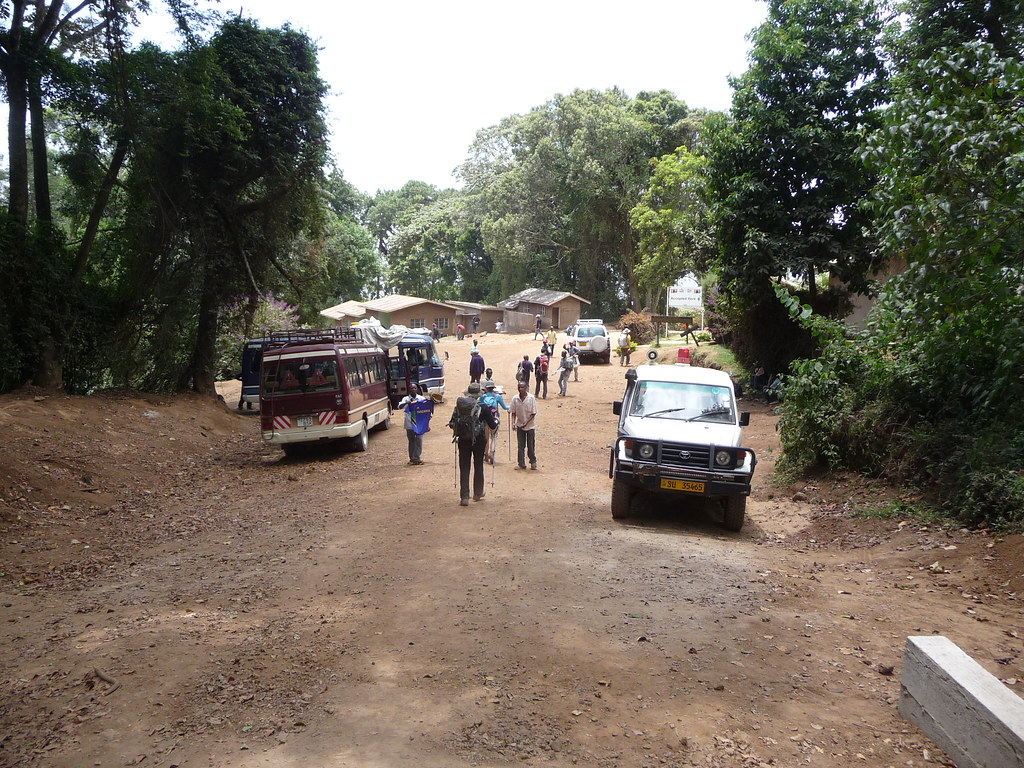
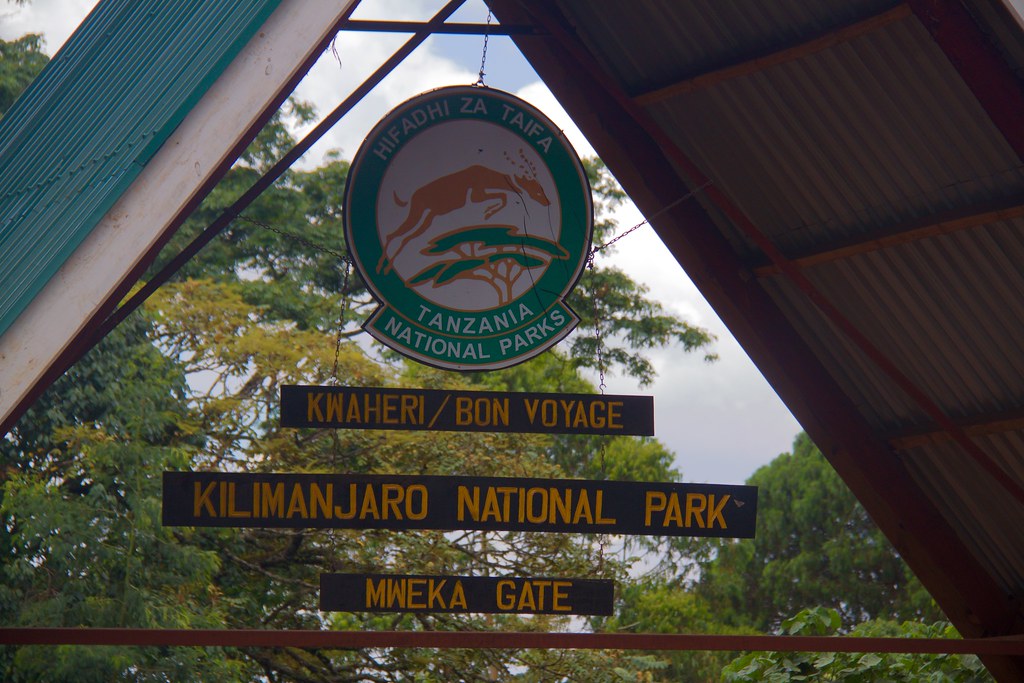
Mweka Gate is one of the most iconic entry and exit points on Mount Kilimanjaro, Africa’s tallest peak standing at 5,895 metres (19,341 feet) above sea level. Located on the southern slopes of Kilimanjaro in Tanzania, Mweka Gate serves primarily as the descent point for climbers who have summited via the Machame Route — one of the most popular and scenic trails on the mountain.
Named after the Mweka College of African Wildlife Management situated nearby, this gate has welcomed and bid farewell to hundreds of thousands of trekkers from across the globe. The surrounding area is enveloped in lush montane forest, alive with birdsong and the sounds of the African wilderness — making the descent through Mweka a memorable finale to an extraordinary Kilimanjaro adventure.
Whether you are planning your first Kilimanjaro climb or seeking detailed information about the Mweka route, this comprehensive guide covers everything you need to know: the gate’s location and altitude, how to get there, what to expect on the trail, and a full 6-day itinerary for the Machame-Mweka route.
Key Facts at a Glance
Feature | Details |
Location | Kilimanjaro National Park, Moshi District, Tanzania |
Gate Altitude | 1,640 metres (5,380 feet) above sea level |
Primary Function | Descent exit point (Machame, Lemosho, Shira routes) |
Nearest Town | Moshi (~11 km) |
Gate Opening Hours | 6:00 AM – 6:00 PM daily |
Park Authority | Tanzania National Parks (TANAPA) |
Route Length (Machame) | Approx. 62 km (round trip) |
Recommended Duration | 6–7 days (Machame Route) |
Best Trekking Season | January–March & June–October |
Summit Altitude | 5,895 m (Uhuru Peak) |
Mweka Gate Altitude
Understanding altitude is critical for any Kilimanjaro trekker, both for acclimatisation planning and safety. Mweka Gate sits at an elevation of approximately 1,640 metres (5,380 feet) above sea level — a relatively low elevation by Kilimanjaro standards, nestled within the rich montane forest zone of the mountain.
Altitude Context Along the Mweka Descent Route
The altitude profile of the Mweka descent route provides valuable insight into the dramatic elevation change trekkers experience after summiting. Below is the altitude progression from Uhuru Peak to Mweka Gate:
Location / Camp | Altitude (m) | Altitude (ft) |
Uhuru Peak (Summit) | 5,895 m | 19,341 ft |
Stella Point | 5,756 m | 18,885 ft |
Barafu Camp | 4,673 m | 15,331 ft |
Millennium Camp (High Camp) | 3,950 m | 12,959 ft |
Mweka Camp | 3,100 m | 10,171 ft |
Mweka Gate (Exit) | 1,640 m | 5,380 ft |
Vegetation & Climate at Mweka Gate’s Altitude
At 1,640 metres, Mweka Gate lies within the dense montane rainforest zone of Kilimanjaro. This ecological belt is characterized by towering trees draped in moss and ferns, diverse birdlife including hornbills, sunbirds and turacos, and occasional sightings of colobus monkeys swinging through the canopy overhead.
The climate at this altitude is warm and humid, with temperatures typically ranging between 15°C and 25°C (59°F–77°F) during the day. Afternoon rains are common, particularly during the long rain season (March–May), so a lightweight rain jacket is always advisable even on descent days.
How to Get to Mweka Gate
Mweka Gate is located approximately 11 kilometres northwest of Moshi town, in the Kilimanjaro Region of northern Tanzania. It is accessible by road and is the standard arrival and departure point for trekkers completing the Machame, Lemosho (some operators), and Shira routes.
Getting to Moshi — Your Base
By Air
The most convenient and popular way to reach the Kilimanjaro region is by flying into Kilimanjaro International Airport (JRO), located between Moshi and Arusha, approximately 45 kilometres from Moshi. The airport receives direct international flights from Nairobi, Addis Ababa, Dar es Salaam, Amsterdam, and other major hubs.
- From Kilimanjaro International Airport (JRO) to Moshi: Approximately 45 minutes by road
- Taxi fare: Approximately USD $30–$50 per vehicle
- Hotel shuttle services are widely available and can be pre-arranged
- Arusha Airport (ARK) is an alternative for domestic connections
By Road from Dar es Salaam
Moshi is also reachable from Dar es Salaam by road, a journey of approximately 520 kilometres taking 7–9 hours by bus. Several reputable coach companies including Kilimanjaro Express and Dar Express operate daily services between the two cities.
By Road from Arusha
Arusha, Tanzania’s safari gateway city, is only 80 kilometres from Moshi — a comfortable 1–1.5 hour drive. Regular dalla-dalla (local minibuses) and private taxis connect the two cities throughout the day.
Getting from Moshi to Mweka Gate
From Moshi, trekkers are transported to Mweka Gate by their tour operators as part of the standard climb package. However, independent transport options also exist:
Option 1: Tour Operator Vehicle (Recommended)
The vast majority of Kilimanjaro climbers are transported to and from Mweka Gate by their registered tour operator. This is included in your climbing package and is the most seamless option, as operators are familiar with the route, park regulations, and logistics.
Option 2: Private Taxi / Car Hire
Private taxis from Moshi to Mweka Gate cost approximately USD $15–$25 one way. The journey takes about 30–40 minutes along a tarmac road that transitions to a murram (gravel) road closer to the gate. Four-wheel-drive vehicles are recommended in wet conditions.
Option 3: Dalla-Dalla (Local Minibus)
Budget travellers can take a dalla-dalla from Moshi’s central bus stand towards Mweka village, followed by a short walk or motorbike taxi (boda-boda) ride to the gate. This is a more adventurous option suited to experienced independent travellers.
Road Directions to Mweka Gate
From Moshi town centre, head northwest on the road towards Mweka village. Pass through the outskirts of Moshi and follow signs for Kilimanjaro National Park — Mweka Gate. The last 3–4 kilometres of the road are unpaved and can be muddy during the rains. GPS Coordinates: Approximately 3°13’S, 37°20’E.
What to Expect at Mweka Gate
Mweka Gate is a well-organised park entry and exit point managed by the Tanzania National Parks Authority (TANAPA). Unlike Machame Gate (the ascent gate), Mweka is primarily used for departures after completing the climb.
Facilities at Mweka Gate
- Park Rangers Office and registration desk
- Clean toilet facilities
- Covered shelter areas for resting
- Small shops and vendors selling soft drinks, snacks and Kilimanjaro souvenirs
- Certificate distribution point — summit certificates are available for purchase
- Parking area for tour operator vehicles
- First aid post for medical emergencies
Registration & Certificates
Upon exiting through Mweka Gate, all trekkers must sign out at the park ranger’s registration desk. This is an important safety formality that confirms all members of your group have safely descended. At this point, you can purchase your Kilimanjaro summit certificate — a highly treasured memento awarded in two tiers:
- Green Certificate: For trekkers who reached Stella Point (5,756 m)
- Gold Certificate: For trekkers who reached Uhuru Peak (5,895 m)
Tipping Ceremony
After signing out, one of the most meaningful traditions at Mweka Gate is the tipping ceremony for your mountain crew — guides, assistant guides, porters, cooks, and camp staff. Tipping is an important part of Kilimanjaro culture and provides essential supplemental income for the crew. The internationally recommended tipping guidelines per trekker for a 6-day climb are:
- Lead Guide: USD $20–$25 per day
- Assistant Guide: USD $15–$20 per day
- Cook: USD $10–$15 per day
- Porter: USD $8–$12 per day
Mweka Route — Complete 6-Day Itinerary
The most popular route that uses Mweka Gate as the descent point is the famous Machame Route, often called the ‘Whiskey Route’ due to its challenging nature. The 6-day Machame-Mweka itinerary offers an excellent balance of acclimatisation, dramatic scenery through multiple ecological zones, and a good summit success rate for fit trekkers.
Route Overview
The Machame Route ascends from Machame Gate on the southwestern slopes of Kilimanjaro, traversing spectacular landscapes including rainforest, moorland, alpine desert, and arctic summit zones before descending via the Mweka Trail. The 6-day route covers approximately 62 kilometres and involves a total elevation gain of over 4,200 metres.
6-Day Route Summary Table
Day | Section | Night Camp | Distance | Hiking Time | Difficulty |
Day 1 | Machame Gate → Machame Camp | 3,010 m | 11 km | 5–7 hrs | Moderate |
Day 2 | Machame Camp → Shira Camp | 3,840 m | 5 km | 4–6 hrs | Moderate |
Day 3 | Shira Camp → Lava Tower → Barranco Camp | 3,976 m | 10 km | 7–8 hrs | Challenging |
Day 4 | Barranco Camp → Karanga Camp | 4,035 m | 5 km | 4–5 hrs | Challenging |
Day 5 | Karanga Camp → Barafu Camp (Summit Night) | 4,673 m | 5 km | 3–5 hrs | Strenuous |
Day 6 | Barafu → Summit → Mweka Camp → Mweka Gate | 1,640 m | 20 km | 12–16 hrs | Very Hard |
Detailed Day-by-Day Breakdown
Day 1 — Machame Gate to Machame Camp (3,010 m)
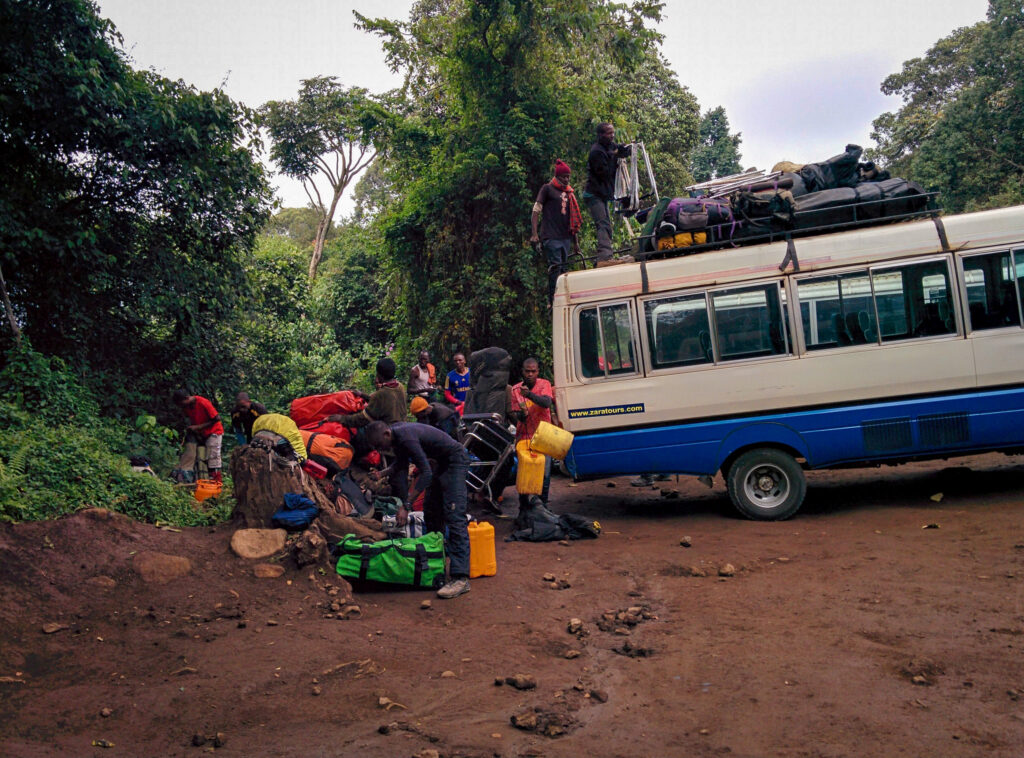
Your Kilimanjaro adventure begins at Machame Gate (1,800 m), a lively starting point where trekkers register and porters sort equipment. From here the trail immediately plunges into the magical montane rainforest, climbing steadily through towering trees draped with old man’s beard lichen and alive with birdsong.
The forest trail is well-defined but can be muddy and slippery, particularly after rains. After approximately 5–6 hours of hiking through the misty forest, the trees thin out and you emerge at Machame Camp — a beautiful campsite on the forest edge with the first views of Kibo’s glaciated summit above.
- Start altitude: 1,800 m (Machame Gate)
- Night camp altitude: 3,010 m (Machame Camp)
- Elevation gain: 1,210 m
- Distance: Approximately 11 km
- Terrain: Rainforest trail, well-defined path, can be slippery
Day 2 — Machame Camp to Shira Camp (3,840 m)
Day 2 takes you out of the forest and into the open moorland and heathland zone — a dramatic landscape change that offers your first unobstructed views of Kilimanjaro’s great cone. The trail climbs steadily through giant heather and groundsel plants before flattening out across the vast Shira Plateau.
The Shira Plateau is one of the geological wonders of Kilimanjaro, an ancient collapsed volcanic caldera now covered in tussock grass and giant lobelia. Shira Camp sits at the edge of the plateau with panoramic views across the plateau to the distant volcanic ridges.
- Start altitude: 3,010 m
- Night camp altitude: 3,840 m (Shira Camp)
- Elevation gain: 830 m
- Distance: Approximately 5 km
- Terrain: Open moorland, heathland, plateau
Day 3 — Shira Camp to Lava Tower & Barranco Camp (3,976 m)
Day 3 is one of the most important days for acclimatisation and one of the most scenically spectacular. The classic ‘climb high, sleep low’ technique is employed as the route ascends to the iconic Lava Tower (4,630 m) before descending to Barranco Camp — a stunning location below the towering Barranco Wall.
The ascent to Lava Tower passes through the alpine desert zone — a stark, otherworldly landscape of volcanic rock and sparse vegetation. The descent into the Great Barranco Valley is dramatic, with views of the Western Breach and the glacier faces of the summit. Barranco Camp is set at the base of the famous Barranco Wall.
- Start altitude: 3,840 m
- High point: Lava Tower at 4,630 m
- Night camp altitude: 3,976 m (Barranco Camp)
- Distance: Approximately 10 km
- Terrain: Alpine desert, rocky paths, valley descent
Day 4 — Barranco Camp to Karanga Camp (4,035 m)
Day 4 begins with the exhilarating Barranco Wall scramble — perhaps the most memorable and photographed section of the entire Machame Route. The wall rises approximately 257 metres above the camp and requires hands-and-feet scrambling on solid volcanic rock. It is steep but not technically difficult, and the views from the top are extraordinary.
After conquering the wall, the trail traverses the southern face of Kilimanjaro through a series of ridges and valleys, passing Karanga Valley before arriving at Karanga Camp — a small but well-positioned campsite with views across the southern ice fields.
- Start altitude: 3,976 m
- Night camp altitude: 4,035 m (Karanga Camp)
- Elevation gain: 59 m (net, with significant ascent and descent)
- Distance: Approximately 5 km
- Terrain: Rock scrambling (Barranco Wall), ridge traverses, loose scree
Day 5 — Karanga Camp to Barafu Camp & Summit Night Preparation (4,673 m)
A shorter hiking day, Day 5 takes you from Karanga Camp up to Barafu Camp — the high camp and launch pad for the summit push. ‘Barafu’ means ‘ice’ in Swahili, and at 4,673 metres the camp sits above the alpine desert in the sub-arctic zone, often swept by fierce winds and bitterly cold temperatures.
Arrive at Barafu in the early afternoon, have lunch, and rest. Your guide will brief you on the summit night plan — typically departing between midnight and 1:00 AM to reach the summit by sunrise. Dinner is served in the early evening, and you should aim to sleep by 7:00–8:00 PM before the midnight wake-up.
- Start altitude: 4,035 m
- Night camp altitude: 4,673 m (Barafu Camp)
- Elevation gain: 638 m
- Distance: Approximately 5 km
- Terrain: Rocky, volcanic scree, exposed ridgeline
Day 6 — Summit Push & Descent to Mweka Gate (1,640 m)
This is the defining day of your Kilimanjaro adventure — the longest, most demanding, and most rewarding day of the entire climb. You will cover approximately 20 kilometres and descend over 3,000 metres in altitude from summit to Mweka Gate.
Midnight: Depart Barafu Camp in darkness, headlamps illuminating the trail as you join a line of trekkers ascending the volcanic scree. The pace is deliberately slow — pole pole (slowly) as your guide reminds you. The trail switchbacks steeply upwards through the sub-arctic zone in temperatures that can plummet to -15°C or lower with wind chill.
Sunrise on Stella Point (5,756 m): After approximately 6–7 hours of ascent, you reach Stella Point on the crater rim — a major milestone celebrated with exhausted cheers. From here, the crater rim trail continues for approximately 45 minutes to Uhuru Peak, the highest point in Africa at 5,895 metres (19,341 feet).
From Uhuru Peak, the descent begins immediately. The route descends steeply back down to Barafu Camp for a brief rest, hot drinks, and lunch, before continuing down through the alpine desert and into the heathland, eventually entering the lush montane forest. The descent to Mweka Camp takes approximately 3–4 hours from Barafu.
Final push to Mweka Gate: From Mweka Camp (3,100 m), most operators continue the descent all the way to Mweka Gate on Day 6, though some overnight at Mweka Camp and complete the gate descent on Day 7. The final forest section to Mweka Gate covers approximately 9 kilometres through dense rainforest and takes 2.5–3.5 hours.
- Departure: Midnight from Barafu Camp
- Stella Point reached: ~6:00–7:00 AM
- Uhuru Peak reached: ~7:00–8:00 AM
- Return to Barafu Camp: ~11:00 AM–12:00 PM
- Mweka Camp reached: ~3:00–4:00 PM
- Mweka Gate arrival: ~6:00–7:00 PM
Acclimatisation & Altitude Sickness
Altitude sickness (Acute Mountain Sickness / AMS) is the most significant health risk on Kilimanjaro. Because Kilimanjaro is a non-technical climb accessible to non-mountaineers, many trekkers underestimate the impact of altitude. Understanding and respecting the acclimatisation process is essential for safety and summit success.
Symptoms of Altitude Sickness
- Headache (most common symptom above 3,000 m)
- Nausea and vomiting
- Fatigue and loss of appetite
- Dizziness and lightheadedness
- Difficulty sleeping
- Shortness of breath at rest (severe AMS)
The 6-Day Advantage
The 6-day itinerary is the minimum recommended duration for the Machame Route. Choosing 6 days over 5 days significantly improves your acclimatisation profile, especially due to the ‘climb high, sleep low’ approach on Day 3 (ascending to Lava Tower at 4,630 m before sleeping at 3,976 m). Studies consistently show that 6-day routes have higher summit success rates than 5-day routes on Kilimanjaro.
Diamox (Acetazolamide)
Many climbers and doctors recommend Diamox as a prophylactic medication to assist acclimatisation. It works by stimulating faster breathing, which increases blood oxygen saturation. Consult your physician before your climb to discuss whether Diamox is appropriate for you, the correct dosage, and any contraindications.
Best Time to Climb via the Mweka Route
Kilimanjaro can be climbed year-round, but weather conditions vary significantly across seasons. The following guide helps you plan the optimal timing for your climb:
Peak Season (Recommended)
- January to March: Clear skies, cold but dry conditions, excellent visibility. Slightly quieter than summer months.
- June to October: The most popular season. Dry weather, cold nights, good summit success rates. July and August are particularly busy.
Shoulder Season (Good)
- November: Short rains begin, but early November can still offer good conditions.
- December: Festive period with moderate crowds and generally reasonable weather.
Low Season (Challenging)
- April and May: The long rain season. Heavy rainfall makes trails muddy and slippery. Mweka Gate’s forest section becomes particularly challenging. Lower prices and fewer climbers.
Essential Packing List for the Mweka Route
Clothing
- Moisture-wicking base layer (top and bottom) — 2 sets
- Insulating mid-layer fleece or down jacket
- Waterproof and windproof outer shell jacket and trousers
- Summit parka — rated for -20°C
- Trekking trousers — 2 pairs
- Warm trekking gloves and summit mittens
- Balaclava or warm hat
- Sun hat for lower altitude sections
- Merino wool or synthetic hiking socks — 6 pairs
- Sturdy waterproof trekking boots (well broken in)
- Camp shoes or lightweight sandals
Gear & Equipment
- Trekking poles — highly recommended
- 35–45L daypack for personal items during hiking
- Duffel bag for porters to carry (max 15 kg)
- Headlamp with fresh batteries and spare batteries
- Sleeping bag rated to -10°C or lower
- Sleeping bag liner for extra warmth
- Sunglasses with UV protection
- High-factor sunscreen (SPF 50+) and lip balm
- Water bottles or hydration bladder (3L capacity)
- Water purification tablets or filter
Health & Medical
- Basic first aid kit
- Blister prevention and treatment supplies
- Altitude sickness medication (consult your doctor)
- Ibuprofen or paracetamol for headaches
- Anti-nausea medication
- Insect repellent for lower altitude camps
Permits, Fees & Booking
All Kilimanjaro climbers must be accompanied by a licensed guide and climb through a registered tour operator — independent climbing is not permitted by TANAPA regulations. This ensures climber safety and supports the local economy.
Park Fees (Per Person)
Kilimanjaro National Park fees are set by TANAPA and are payable in USD. The total park fees for a 6-day Machame-Mweka climb are approximately:
- Conservation Fee: USD $70 per day × 6 days = USD $420
- Camping Fee: USD $50 per night × 5 nights = USD $250
- Rescue Fee: USD $20 (once-off)
- Crew Park Fees: Additional fees apply for guides and porters
Total Climb Packages
All-inclusive 6-day Machame Route climb packages from reputable operators typically range from USD $1,800 to USD $3,500 per person, depending on group size, operator quality, and inclusions. Budget operators offering significantly lower prices should be approached with caution — porter welfare and safety standards are critical factors to verify.
Expert Tips for Mweka Gate & Machame Route
- Book your climb at least 3–6 months in advance, especially for peak season travel.
- Choose an operator certified by the Kilimanjaro Association of Tour Operators (KATO) or the Kilimanjaro Porters Assistance Project (KPAP).
- Train for 3–6 months before your climb — regular hiking with elevation gain is the best preparation.
- Hydrate aggressively — drink at least 3–4 litres of water per day on the mountain.
- Follow the golden rule: Pole pole (slowly, slowly). Rushing is the number one cause of summit failure.
- On summit night, wear ALL your warmest layers from the start — temperatures drop rapidly above 4,500 m.
- Bring energy snacks you enjoy eating when nauseous: gels, sweets, dried fruit are ideal.
- Tip your crew generously — porters carry up to 20 kg and are the backbone of every successful Kilimanjaro expedition.
- Have travel insurance that specifically covers high-altitude trekking and emergency evacuation.
- Arrive in Moshi at least 1 day before your climb starts to rest and organise equipment checks.
Conclusion
Mweka Gate stands as both the welcoming embrace and triumphant farewell of one of the world’s greatest trekking adventures. From its position at 1,640 metres within Kilimanjaro’s ancient rainforest, this unassuming gate has been the emotional finale for millions of trekkers who dared to dream of Africa’s Roof.
Whether you emerge at Mweka Gate exhausted and elated after conquering Uhuru Peak, or you visit to begin understanding the logistics of your future climb, the gate encapsulates the spirit of Kilimanjaro — accessible yet demanding, beautiful yet unforgiving, and endlessly rewarding for those who approach it with respect, preparation, and the right pace.
Plan carefully, train diligently, choose your operator wisely, and let the mountain decide your fate. As the Swahili saying goes: Kilimanjaro si mchezo — Kilimanjaro is no joke. But with the right preparation, Mweka Gate will be the most joyful exit of your life.