7 days Climbing Kilimanjaro Machame Route Hiking Tour
7 days Climbing Kilimanjaro Machame Route Hiking Tour, highest peak in Africa and one of the world’s most coveted trekking destinations. Every year, tens of thousands of adventurers from around the globe attempt to summit this dormant stratovolcano, which straddles the border of Tanzania and Kenya in East Africa. Among the seven established routes on Kilimanjaro, the Machame Route — affectionately nicknamed the “Whiskey Route” for its demanding nature — stands out as the most popular and arguably the most spectacular.
This 7-day itinerary on the Machame Route offers climbers the ideal balance of acclimatization, stunning scenery, and summit success. The route approaches from the south, traversing lush rainforest, open moorland, dramatic heathlands, the alien-like alpine desert, and finally the glaciated summit zone. The extra day compared to the 6-day version dramatically improves your chances of reaching Uhuru Peak, the highest point on Kilimanjaro’s crater rim.
Quick Facts at a Glance
Detail | Information |
Duration | 7 Days / 6 Nights |
Route Name | Machame Route (Whiskey Route) |
Summit Elevation | 5,895 m / 19,341 ft (Uhuru Peak) |
Machame Gate Elevation | 1,800 m / 5,906 ft |
Total Distance | Approximately 62 km (38 miles) round trip |
Difficulty Level | Challenging — suitable for fit trekkers |
Best Seasons | January–March and June–October |
Success Rate (7-day) | Approximately 85–90% |
Country | Tanzania, East Africa |
Park Authority | Tanzania National Parks (TANAPA) |
Accommodation | Tent camping at designated campsites |
Group Size | Small to medium groups recommended |
Why Choose the Machame Route?
The Machame Route has earned its reputation as the most scenic path to Kilimanjaro’s summit. Here is why thousands of climbers choose it every year:
- Exceptional Scenery: The route passes through five distinct ecological zones — rainforest, heathland, moorland, alpine desert, and the Arctic summit — offering an extraordinary diversity of landscapes in just seven days.
- Optimal Acclimatisation: The 7-day itinerary follows the principle of ‘climb high, sleep low’, giving your body sufficient time to adapt to the decreasing oxygen levels at altitude.
- High Summit Success Rate: With the extra acclimatisation day, the 7-day Machame Route boasts an impressive success rate of 85–90%, significantly higher than shorter routes.
- Variety of Terrain: Unlike some routes that cover similar landscapes throughout, Machame offers consistently changing scenery that keeps trekkers engaged and motivated.
- Well-Maintained Infrastructure: The route has excellent camping facilities at each designated campsite, with reliable water sources and well-marked trails throughout.
- Social Atmosphere: As the most popular route, Machame allows you to meet fellow adventurers from around the world, fostering camaraderie on the mountain.
- Physical Challenge and Reward: The nickname ‘Whiskey Route’ reflects its demanding but rewarding nature — it is tougher than the Marangu ‘Coca-Cola’ route but far more gratifying.
Day-by-Day Itinerary
Day 1: Machame Gate to Machame Camp
Start Altitude 1,800 m | End Altitude 3,021 m | Distance ~11 km | Duration 5–7 hours |
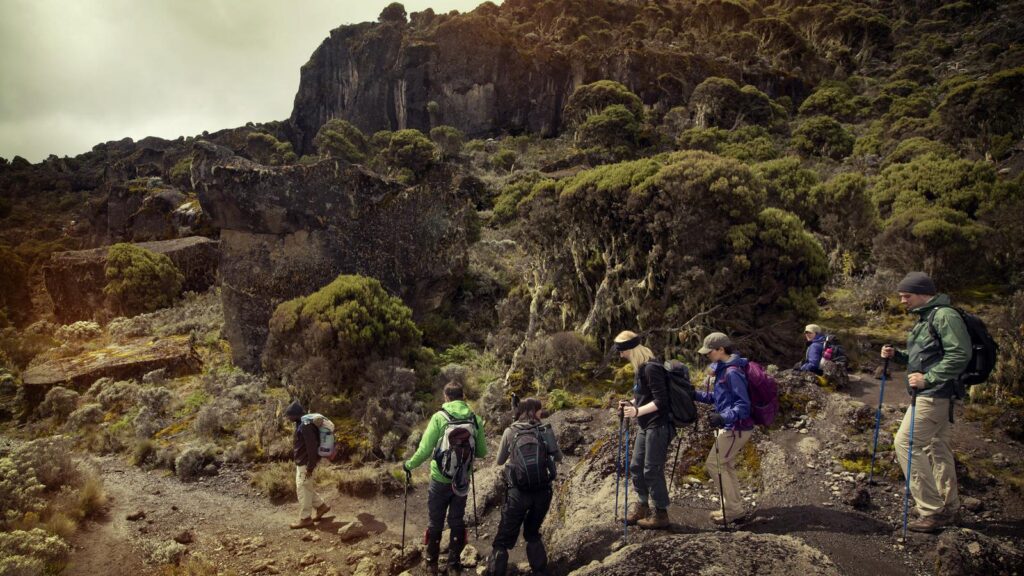
Your Kilimanjaro adventure begins at Machame Gate, where park rangers check permits and guides conduct equipment inspections. After completing registration formalities, the trail plunges immediately into the dense montane rainforest that envelops the lower slopes of Kilimanjaro. This lush green corridor is alive with the sounds of birds, colobus monkeys, and the gentle drip of moisture from the forest canopy.
The forest trail is well-defined and relatively straightforward, though muddy sections can make progress slow. As you climb through towering trees draped with Old Man’s Beard lichen, the vegetation gradually transitions from thick jungle to heath and moorland vegetation. By afternoon, you emerge from the forest into the open air of Machame Camp, where your tents and crew await. The first views of Kibo — Kilimanjaro’s highest crater — appear dramatically above you, setting the tone for the days ahead.
Campsite: Machame Camp (3,021 m)
Meals: Lunch and dinner provided
Highlights: Rainforest canopy, colobus monkeys, first views of Kibo
Day 2: Machame Camp to Shira Camp
Start Altitude 3,021 m | End Altitude 3,840 m | Distance ~5 km | Duration 4–6 hours |
Day two takes you higher onto the open southern slopes of Kilimanjaro, where the forest has given way to heather and moorland. The landscape opens dramatically, offering sweeping views back over the Tanzanian plains thousands of metres below. Giant heather trees, some several metres tall, line the rocky trail alongside colourful wildflowers and the alien-like giant lobelias and groundsels that characterise Kilimanjaro’s moorland zone.
The trail climbs steeply in sections, requiring use of hands in a few rocky scrambles. This is where many trekkers first begin to feel the effects of altitude — mild headaches or breathlessness are normal and to be expected. The pace is deliberately slow, following the guide’s mantra of ‘pole pole’ (Swahili for ‘slowly, slowly’). Upon reaching Shira Camp on the ancient Shira Plateau, you are rewarded with breathtaking panoramic views in all directions. On clear days, you can see as far as Moshi town and beyond.
Campsite: Shira Camp (3,840 m)
Meals: Breakfast, lunch, and dinner provided
Highlights: Giant heather forest, Shira Plateau panoramas, lobelia fields
Day 3: Shira Camp to Barranco Camp (via Lava Tower)
Start Altitude 3,840 m | High Point 4,600 m | End Altitude 3,976 m | Duration 6–8 hours |
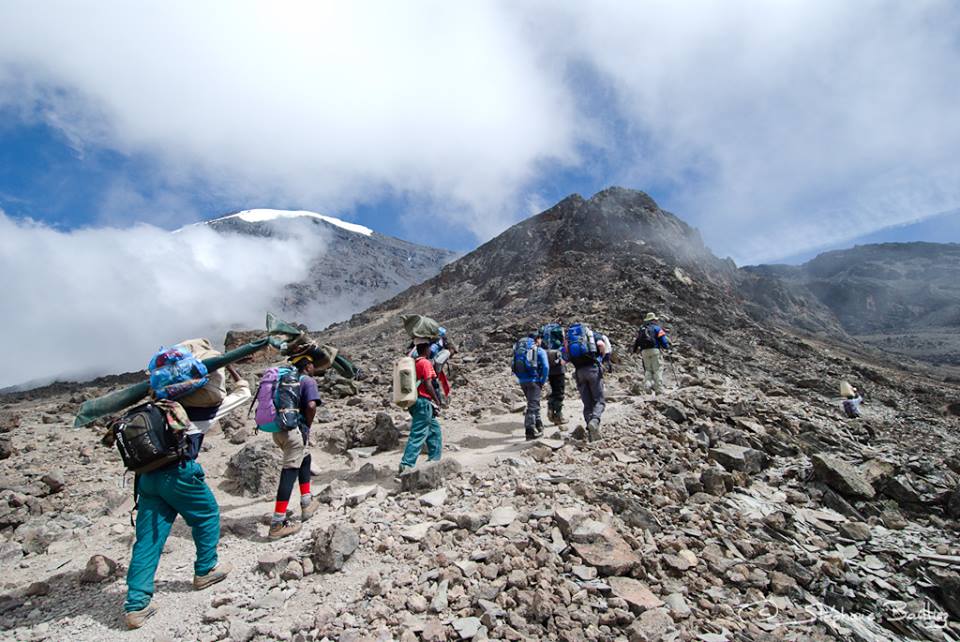
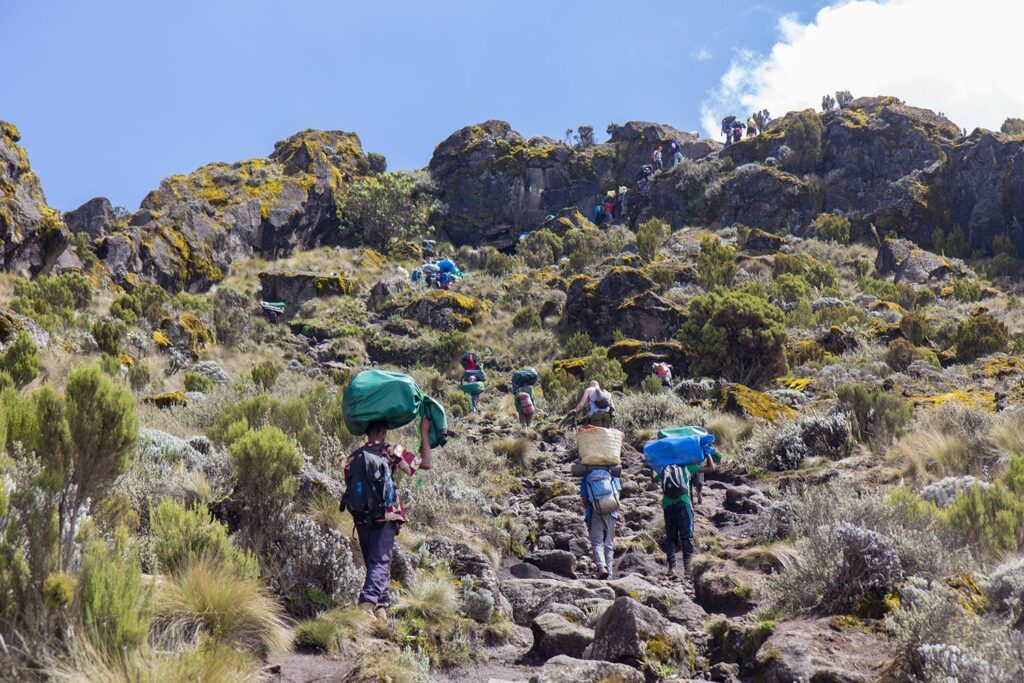
Day three is the crucial acclimatisation day and one of the most physically demanding on the route. The trail climbs high above the Shira Plateau towards the base of Kibo, reaching Lava Tower — a dramatic volcanic plug rising 300 metres — at an altitude of approximately 4,600 metres. This is among the highest points you will reach before summit night, making the effort here a critical investment in your body’s preparation for the summit push.
From Lava Tower, the trail descends steeply into the magical Barranco Valley, dropping more than 600 metres in a relatively short distance. This ‘climb high, sleep low’ approach is the cornerstone of acclimatisation physiology — spending time at high altitude stimulates red blood cell production while sleeping lower ensures better rest and recovery. The Barranco Valley itself is a remarkable place: a sheltered, lush oasis at nearly 4,000 metres, filled with giant senecios (giant groundsels) that look like something from a prehistoric era. The Great Barranco Wall looms above the campsite, a hint of tomorrow’s adventure.
Campsite: Barranco Camp (3,976 m)
Meals: Breakfast, lunch, and dinner provided
Highlights: Lava Tower, Barranco Valley, giant senecios, views of Southern Glaciers
Day 4: Barranco Camp to Karanga Camp
Start Altitude 3,976 m | End Altitude 4,035 m | Distance ~5 km | Duration 4–5 hours |
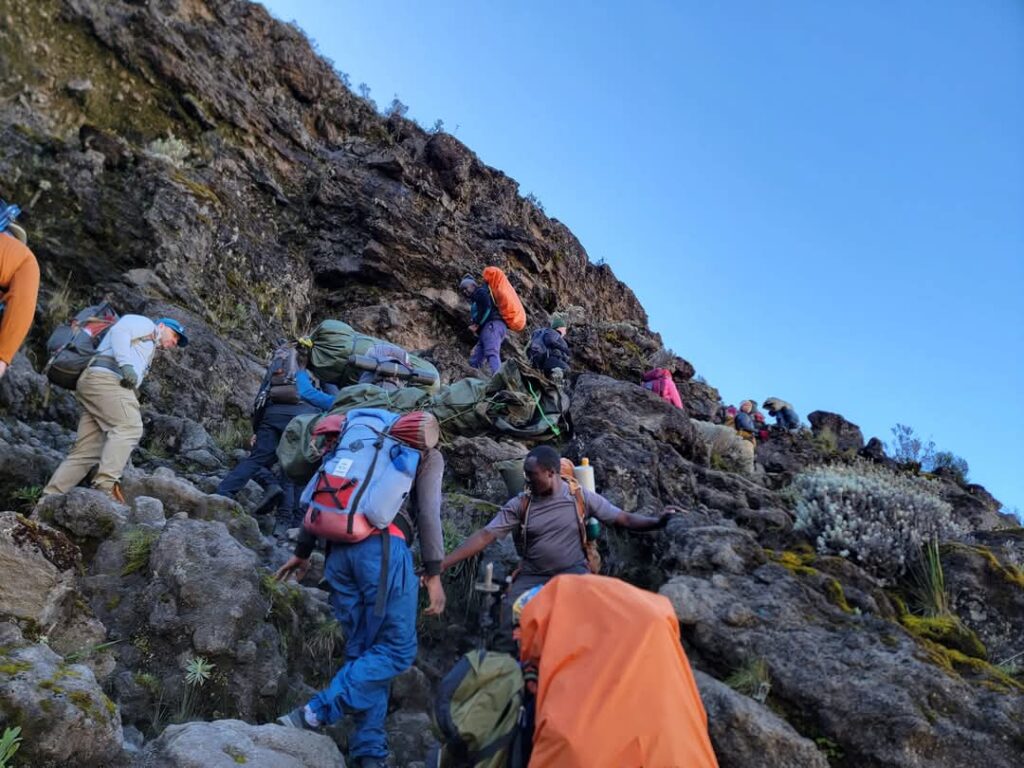
The morning of Day 4 begins with one of the most thrilling sections of the entire route — the ascent of the Great Barranco Wall. This near-vertical rock face, roughly 300 metres high, requires both hands and feet to scramble up its rocky ledges and chimneys. Despite its intimidating appearance from below, the climb is not technical — no ropes or climbing equipment are needed — and is more of an exhilarating scramble than a true rock climb. The reward at the top is an outstanding view back across the route and the Southern Ice Field above.
Beyond the wall, the trail traverses the dramatic southern face of Kilimanjaro through a series of valleys and ridgelines. The landscape is now firmly in the alpine desert zone — barren, rocky, and windswept, with only the most resilient plants surviving at this altitude. The path passes by the Karanga Valley water point before arriving at Karanga Camp, a relatively small but sheltered campsite perched on a ridge with commanding views of the summit ice fields. This is the last camp with a reliable water source before the summit.
Campsite: Karanga Camp (4,035 m)
Meals: Breakfast, lunch, and dinner provided
Highlights: Barranco Wall scramble, dramatic ridgeline traverse, ice field views
Day 5: Karanga Camp to Barafu Base Camp
Start Altitude 4,035 m | End Altitude 4,673 m | Distance ~4 km | Duration 3–4 hours |
Day 5 is deliberately kept short to ensure trekkers arrive at Barafu Base Camp well-rested and with ample time to prepare for the summit push. The trail climbs steadily from Karanga through the stark, rocky alpine desert. At this altitude, vegetation is virtually absent — only a few hardy mosses and lichens cling to the rocks. The air is noticeably thin, and even minor exertion leaves many trekkers breathless. Slow and steady progress is the only strategy at this stage.
Barafu Camp is one of the most exposed and dramatic campsites on any of Kilimanjaro’s routes. Perched on a narrow ridge at nearly 4,700 metres, the camp is buffeted by cold winds and offers stark, almost lunar views of the summit above and the Kenyan plains below. The name ‘Barafu’ means ‘ice’ in Swahili, reflecting the freezing temperatures that can grip the camp even in summer. Upon arrival, trekkers receive a thorough pre-summit briefing from their guides covering the summit night route, pacing strategies, signs of altitude sickness, and turnaround policies. An early dinner is served, and climbers are encouraged to rest and sleep before a midnight departure.
Campsite: Barafu Base Camp (4,673 m)
Meals: Breakfast, lunch, and dinner provided
Highlights: Summit briefing, dramatic camp views, preparation for summit night
Day 6: Summit Day — Barafu to Uhuru Peak to Mweka Camp
Start Altitude 4,673 m | Summit 5,895 m | End Altitude 3,100 m | Duration 12–16 hours |
Summit night is the culmination of your entire Kilimanjaro journey — and without question, the most challenging and unforgettable night of your life. Departure from Barafu is typically between midnight and 1:00 AM, timed to reach the crater rim at Stella Point (5,756 m) before sunrise. The timing is deliberate: the frozen ground is firmer and safer in the pre-dawn hours, and the sunrise viewed from near the summit is one of the most spectacular natural phenomena on earth.
The ascent from Barafu to Stella Point takes 5–7 hours on a trail of scree, rock, and ice. The gradient is relentless and the conditions are extreme — temperatures can plunge to -20°C (-4°F) with wind chill, and the oxygen levels are approximately 50% of what they are at sea level. Many trekkers experience intense fatigue, nausea, and headaches at this stage. The guides are highly experienced in managing these symptoms and in making the critical call about turnarounds when necessary.
Reaching Stella Point on the crater rim — greeted by the first light of dawn painting the horizon in shades of gold and crimson — is an emotional moment that moves many trekkers to tears. But the summit is not yet reached. From Stella Point, a further 45–60 minutes of hiking along the crater rim brings you to Uhuru Peak, the highest point in Africa. The famous wooden summit sign stands proudly at 5,895 metres, and the surrounding Furtwangler Glacier and the vast expanse of Africa stretching out below create an image that stays with you for a lifetime.
After celebrating at the summit, the descent begins immediately. The trail drops back to Barafu for a brief rest and hot meal before continuing down to Mweka Camp. The descent is hard on the knees but swift, and the improving oxygen levels with every step downward are noticeable and energising. Arriving at Mweka Camp feels like arriving in a different world — the air is rich with oxygen, the vegetation has returned, and the warmth is welcome after the extreme cold of the summit.
Campsite: Mweka Camp (3,100 m)
Meals: All meals provided throughout the day
Highlights: SUMMIT — Uhuru Peak (5,895 m), sunrise from the crater rim, glaciers, Stella Point, emotional achievement
Day 7: Mweka Camp to Mweka Gate — Descent and Departure
Start Altitude 3,100 m | End Altitude 1,640 m | Distance ~10 km | Duration 3–4 hours |
The final day is a descent through the rainforest to Mweka Gate, the lower exit point of the Machame-Mweka circuit. The trail winds down through increasingly dense vegetation — from moorland back through the rich, humid montane forest — and the contrast with the barren summit zone could not be more dramatic. Butterflies flit through shafts of sunlight, birds sing in the canopy, and the warm, moist air feels like a blessing after days above the treeline.
At Mweka Gate, certificates are distributed by park rangers — a Green Certificate for reaching Stella Point on the crater rim, and a Gold Certificate for reaching Uhuru Peak. This is also where the tip ceremony traditionally takes place, a moment to express heartfelt gratitude to the guides, assistant guides, cooks, and porters who made your summit possible. The Kilimanjaro porter community is one of the most hardworking and dedicated in the world, and their contribution to your success cannot be overstated.
From Mweka Gate, transport returns you to your hotel in Moshi or Arusha, where a hot shower, a proper bed, and a celebratory meal await. Many climbers describe the post-summit feeling as one of the most profound experiences of their lives — a combination of physical exhaustion, immense pride, and a deep gratitude for the extraordinary journey completed.
End Point: Mweka Gate (1,640 m)
Meals: Breakfast and lunch provided
Highlights: Rainforest descent, summit certificates, tip ceremony, return to Moshi
Elevation Profile Summary
Day | Start Camp | End Camp | Start (m) | End (m) | Gain/Loss |
Day 1 | Machame Gate | Machame Camp | 1,800 | 3,021 | +1,221 m |
Day 2 | Machame Camp | Shira Camp | 3,021 | 3,840 | +819 m |
Day 3 | Shira Camp | Barranco Camp | 3,840 | 3,976 | +136 m* |
Day 4 | Barranco Camp | Karanga Camp | 3,976 | 4,035 | +59 m |
Day 5 | Karanga Camp | Barafu Camp | 4,035 | 4,673 | +638 m |
Day 6 | Barafu Camp | Mweka Camp | 4,673 | 3,100 | +1,222/-2,795 |
Day 7 | Mweka Camp | Mweka Gate | 3,100 | 1,640 | -1,460 m |
* Day 3 includes an excursion to Lava Tower (4,600 m) before descending to Barranco Camp — net gain is modest but total elevation change is significant.
What Is Included in the Tour Package
Included
- All park fees and conservation levies (Kilimanjaro National Park entrance, camping, and rescue fees)
- Professional, experienced English-speaking lead guide and assistant guides
- Licensed, well-trained, and fairly compensated porters
- Professional camp cook and all meals during the climb (breakfast, lunch, dinner, and snacks)
- Camping equipment: high-quality mountain tents, mess tent, toilet tent, and camp chairs
- All camping utensils, crockery, and cutlery
- Boiled and purified drinking water throughout the climb
- Emergency supplemental oxygen cylinder carried by guides
- Pulse oximeter health monitoring throughout the climb
- Summit certificate upon successful completion
- Airport transfers to and from Kilimanjaro International Airport (KIA) or Arusha
- One night pre-climb hotel accommodation (bed and breakfast) in Moshi
- One night post-climb hotel accommodation (bed and breakfast) in Moshi
Not Included
- International airfare and visa fees
- Personal travel and medical insurance (compulsory — must cover high-altitude trekking)
- Personal trekking gear (sleeping bag rated to -20°C, trekking poles, gaiters, etc.)
- Tips and gratuities for guides, porters, and cooks (customary and strongly encouraged)
- Personal snacks, energy bars, and supplements beyond what is provided
- Alcoholic beverages and soft drinks
- Medication for altitude sickness (consult your doctor about Diamox)
- Optional gear rental (sleeping bags, trekking poles available at additional cost)
Essential Packing List
Clothing & Layering System
- Moisture-wicking base layer (thermal tops and bottoms) — 2 sets
- Insulating mid-layer (fleece jacket or down jacket)
- Waterproof and windproof outer shell jacket and trousers
- Warm hat (beanie/balaclava) and sun hat
- Heavyweight gloves and liner gloves
- Wool or synthetic trekking socks — at least 4 pairs
- Gaiters for summit night scree
- Lightweight trekking trousers and shorts for lower elevations
Footwear
- Well broken-in, waterproof hiking boots with ankle support (essential — do not use new boots)
- Lightweight camp shoes or sandals for relaxing at camp
Gear & Equipment
- Rucksack (20–30 litres) for daily use — porters carry main duffel bag
- Duffel bag (maximum 15 kg) for porter-carried luggage
- Sleeping bag rated to at least -20°C (optional rental available)
- Trekking poles (highly recommended, especially for descent)
- Headlamp with extra batteries (essential for summit night)
- Sunglasses with UV-400 protection
- Water bottles (2 litres capacity minimum) or hydration bladder
- Waterproof stuff sacks or dry bags for gear protection
Health & Personal Items
- High-factor sunscreen (SPF 50+) and lip balm with UV protection
- Personal first aid kit including blister treatment, pain relief, and anti-diarrhoea medication
- Altitude sickness medication (Diamox — consult your physician before travel)
- Hand sanitiser and biodegradable wet wipes
- Toilet paper and small trowel
- Insect repellent (for lower elevations)
- Camera with extra batteries (cold weather drains batteries rapidly)
- Personal snacks: energy gels, nuts, chocolate, dried fruit
Physical Fitness and Preparation
Kilimanjaro is frequently described as a ‘trekkers peak’ — meaning that unlike technical mountaineering objectives, it does not require ropes, crampons (except occasionally on summit night), or technical climbing skills. However, this description can be misleading. The 7-day Machame Route is a serious undertaking that demands a good level of cardiovascular fitness, muscular endurance, and mental resilience.
Recommended Pre-Trip Training
- Begin a structured fitness programme at least 3–6 months before your departure date.
- Long hikes (4–8 hours) on weekends, ideally with a loaded pack and elevation change, are the most specific training available.
- Cardiovascular training: running, cycling, swimming, or rowing for 45–60 minutes, 3–5 times per week.
- Strength training focusing on legs, core, and upper back — squats, lunges, step-ups, and planks.
- Stair climbing with a loaded pack is an excellent simulation of the demands of the route.
- If possible, spend time at altitude before the climb — even a weekend in the mountains at 2,000–3,000 m is beneficial.
Mental preparation is equally important. High-altitude trekking pushes you beyond your comfort zone in ways that are difficult to simulate at home. Practising mindfulness, breathing techniques, and developing a positive but realistic attitude towards difficulty will serve you well on summit night.
Altitude Sickness: Understanding and Prevention
Altitude sickness, or Acute Mountain Sickness (AMS), is the most significant health risk on Kilimanjaro and the primary reason climbers fail to reach the summit. It occurs when the body does not acclimatise quickly enough to the reduced oxygen levels at altitude. Understanding its symptoms and prevention is critical.
Symptoms of AMS
- Headache (the hallmark symptom)
- Nausea, vomiting, or loss of appetite
- Fatigue and weakness disproportionate to exertion
- Dizziness and lightheadedness
- Difficulty sleeping
- Shortness of breath at rest
Preventing Altitude Sickness
- Follow your guide’s pace — never rush, and embrace the ‘pole pole’ philosophy.
- Stay well hydrated: drink 3–4 litres of water per day throughout the climb.
- Eat regular, carbohydrate-rich meals even when appetite is reduced.
- Avoid alcohol and sedatives during the climb.
- Consider Diamox (Acetazolamide) — a prescription medication that can reduce AMS symptoms. Consult your physician at least 4–6 weeks before departure.
- Report any symptoms immediately to your guide — no symptom is too minor to mention.
The strict turnaround policy of professional guide companies exists to save lives. If symptoms become severe, descent is the only effective treatment, and guides are trained to act swiftly. The 7-day Machame Route’s superior acclimatization profile makes it significantly safer than shorter alternatives.
Best Time to Climb Kilimanjaro
Kilimanjaro can be climbed year-round, but two distinct dry seasons offer the most favorable conditions:
January to March (Short Dry Season)
The first months of the year bring dry, clear skies and excellent visibility. Temperatures are slightly warmer than the other dry season, and the mountain is less crowded than during the peak July–August period. This is an excellent time for climbers seeking a quieter, more personal experience.
June to October (Long Dry Season)
June through October is the most popular climbing season on Kilimanjaro. The skies are reliably clear, temperatures are cool and crisp, and the paths are drier and firmer underfoot. July and August see the highest traffic on the mountain. The tradeoff for the crowds is outstanding summit visibility — on clear days, the view from Uhuru Peak extends hundreds of kilometres in every direction.
Shoulder Seasons and Rainy Periods
April and May bring the long rains — heavy, persistent downpours that make the lower forest trails muddy and treacherous and significantly reduce visibility on the upper mountain. November brings short rains. While determined climbers do attempt the mountain during these periods at reduced cost, the experience is markedly inferior. The trails can be dangerously slippery, summit views are frequently obscured, and the risk of hypothermia increases substantially.
Responsible Tourism and Conservation
Kilimanjaro National Park is a UNESCO World Heritage Site and one of East Africa’s most treasured natural environments. The mountain and its surrounding ecosystems are under increasing pressure from tourism, climate change, and local resource extraction. Every trekker has a responsibility to minimise their impact on this extraordinary environment.
Leave No Trace Principles
- Carry out all waste — plastic bags, food packaging, and personal rubbish must be removed from the mountain.
- Use designated toilet facilities at all campsites. Never urinate or defecate within 100 metres of a water source.
- Do not pick plants, disturb wildlife, or remove rocks or geological features.
- Stay on marked trails to prevent erosion of the fragile alpine soils.
Supporting the Porter Community
The porters who carry your equipment up Kilimanjaro are the unsung heroes of every successful climb. Choose operators who are members of the Kilimanjaro Porters Assistance Project (KPAP) and who guarantee fair wages, proper equipment, and safe working conditions for all crew members. Tipping generously and directly is one of the most meaningful ways to support the communities that depend on Kilimanjaro tourism for their livelihoods.
Accommodation and Logistics
Pre and Post-Climb Hotel
Most climbers spend at least one night in Moshi before beginning the trek and one night after returning from the mountain. Moshi is a charming, bustling town at the foot of Kilimanjaro with a wide range of accommodation options from budget guesthouses to luxury lodges. Recommended hotels include the luxurious Kilimanjaro Wonders Hotel, the atmospheric Bristol Cottages, and the mid-range Springlands Hotel, which is a popular base for Kilimanjaro climbers.
On-Mountain Camping
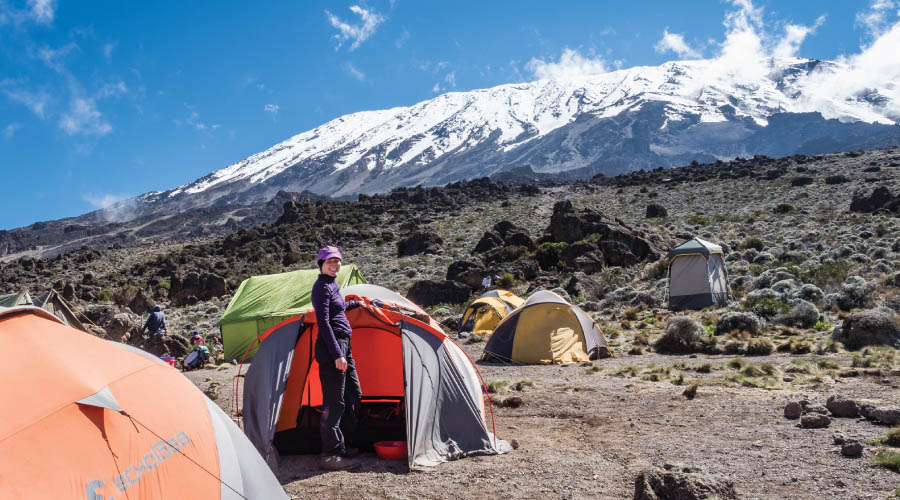
All sleeping on the Machame Route is in camping tents at designated National Park campsites. Your operator provides mountain tents (typically dome or tunnel tents rated for high-altitude conditions), sleeping pads, a dining tent, and a portable toilet tent. Trekkers must bring their own sleeping bags rated to at least -20°C. Campsites have basic long-drop toilet facilities, and water is available (requiring purification) at most sites.
Getting There
Most international travellers fly into Kilimanjaro International Airport (JRO), located between Moshi and Arusha. Major airlines offer connections via Nairobi, Addis Ababa, Dubai, and Amsterdam, among others. Arusha is approximately 1.5 hours by road from the airport; Moshi is approximately 45 minutes. Reputable operators arrange airport transfers as part of the tour package.
Final Thoughts: The Kilimanjaro Experience
Climbing Kilimanjaro via the Machame Route over seven days is far more than a physical challenge — it is a journey through some of the most dramatic and diverse landscapes on the African continent, a test of will and character, and an encounter with a mountain that has inspired adventurers for generations. From the first steps in the rainforest to the emotional arrival at Uhuru Peak, every moment on the mountain carries a particular weight and beauty.
The guides and porters who accompany you are more than service providers — they are the keepers of the mountain’s traditions, knowledgeable stewards of its ecology, and often the most motivating companions you will ever have. Their pride in the mountain and in your achievement is genuine and infectious.
When you finally stand at the summit of Africa, gazing out over the cloud-covered continent as the rising sun turns the glaciers golden, you will understand why Kilimanjaro holds such a powerful place in the imagination of travellers everywhere. It is, as Ernest Hemingway suggested, a place of wide beauty and great significance — a destination that rewards those who approach it with respect, preparation, and an open heart.